

Skip Trenching: Off Grid Well House Ventilation and CFM Fan Sizing
Skip Trenching: Off Grid Well House Ventilation and CFM Fan Sizing
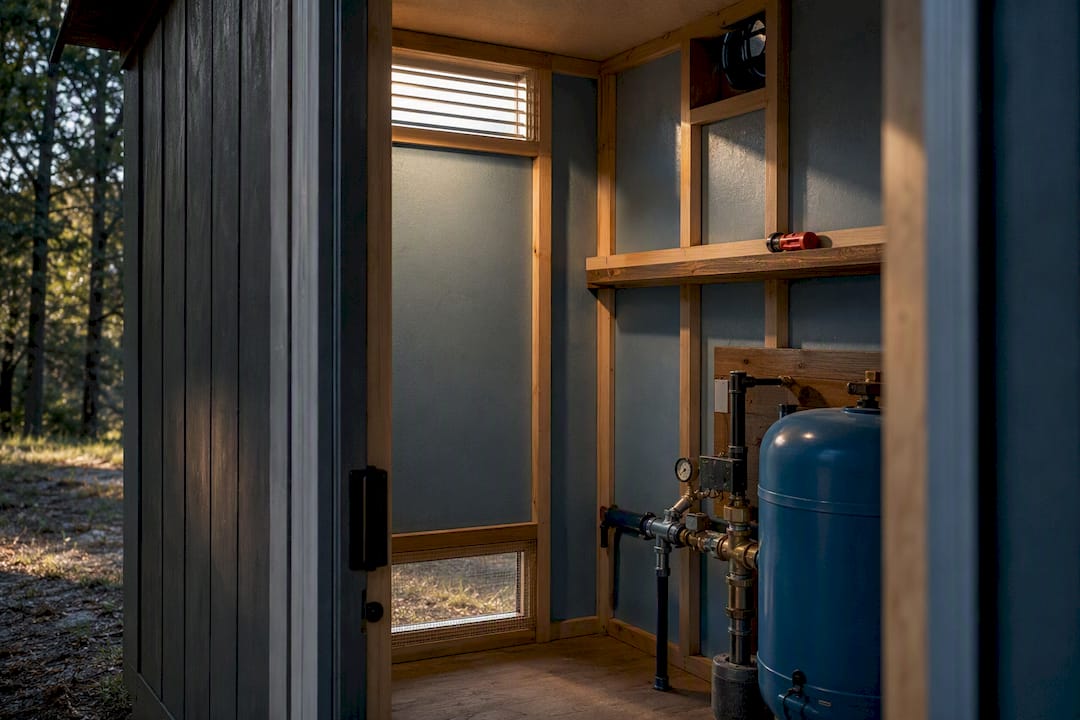
Seal the well house tight, then give it exactly the ventilation it needs. That means an air-sealed, insulated shell with a small screened intake low on one wall, a thermostatically controlled exhaust fan or heater matched to your climate, and a dedicated vent for the well casing itself, run outdoors and above flood level to clear methane or hydrogen sulfide before it ever reaches your equipment.
TL;DR:
- Small well houses should be sealed and insulated first, then ventilated using either passive vents or fan control depending on moisture signs.
- Mechanical exhaust fans or a humidistat-controlled system are necessary once condensation, rust, or high humidity persist beyond mild climate conditions.
- An outdoor, screened vent is essential for the well casing to safely vent methane and hydrogen sulfide gases, with proper termination above flood level.
- A well house’s ventilation system needs to match its size and heat load, typically around 5 to 15 air changes per hour, adjustable with a thermostat or humidistat.
- Remote sites benefit from solar or low-voltage fan kits, while grid-powered locations can use standard thermostatic exhaust fans for optimal airflow management.
Table of Contents
- What “Seal Tight, Ventilate Right” Means for a Well House
- Do You Need Passive Vents or a Fan?
- Insulating and Air-Sealing a Small Well House Correctly
- Sizing a Heater and Heat Tape So Nothing Freezes
- Managing Condensation, Corrosion, and Moisture
- Venting the Well Casing Safely
- How Much Airflow Does Your Well House Actually Need?
- Seasonal Maintenance Checklist for Well House Ventilation
- Where Solar Ventilation Fits in a Well House Plan
- Matching Westernharmonics Hardware to Your Well House Plan
- Sources
What “Seal Tight, Ventilate Right” Means for a Well House
The U.S. Department of Energy’s building science guidance puts it plainly: air-seal the shell first, then add the specific ventilation the space needs. Uncontrolled leaks around door frames, pipe penetrations, and roof junctions do the opposite of what most owners assume. They let in humid outside air in summer and dump conditioned heat in winter, which is exactly the moisture and freeze combination that ruins pressure switches and corrodes fittings.
A well house that follows this principle has five working parts:
- An air-sealed, insulated shell (walls, roof, and slab edge treated as one continuous barrier)
- A small screened low intake vent for makeup air
- A controlled exhaust path, either passive or fan-driven, sized to the heat and moisture load
- A thermostat or humidistat that runs the fan or heater only when needed
- A separate, dedicated vent for the well casing that terminates outdoors
Passive vents alone work fine for small, lightly loaded well houses in mild climates. Once you add a heater, a larger pump motor, or you’re in a climate with real humidity swings, mechanical control earns its keep.
Do You Need Passive Vents or a Fan?
Most small well houses start with a simple passive layout: one screened low vent for intake, one higher vent or ridge opening for exhaust. Warm, moist air rises and exits the high vent while cooler air is drawn in low, and no power or wiring is required. ASHRAE’s whole-house ventilation guidance frames this as controlled, not incidental, airflow. It’s a target ACH rate, not a hole cut wherever it’s convenient.
Passive stops being enough when you see any of these signs:
- Condensation beads on pipe fittings or the inside of windows most mornings
- The pump motor housing feels hot to the touch during normal cycling
- Humidity stays high even after a dry, breezy day outside
- Rust or mineral streaking appears on metal hardware within a season or two
Once one of those shows up, add control. A thermostat or humidistat wired to a small exhaust fan lets the space breathe only when it needs to, instead of bleeding heat around the clock. Grid-powered sites do well with a standard AC thermostatic exhaust fan. Remote sites without nearby power do better with a low-voltage DC fan or a solar fan kit paired with a small battery, which avoids trenching wire out to a well house that may sit a quarter mile from the panel.
Pro Tip: Mount the humidistat away from direct airflow off the intake vent. Sensors placed right in the draft read artificially dry and under-run the fan.
Insulating and Air-Sealing a Small Well House Correctly
Closed-cell spray foam is the material most builders reach for in a well house because it does two jobs in one pass: it seals air leaks and adds high R-value in a space too small to fuss with separate vapor barriers and batt insulation. Exterior rigid foam board is the practical alternative when you’re building or retrofitting with dimensional lumber and want a continuous thermal layer outside the studs.
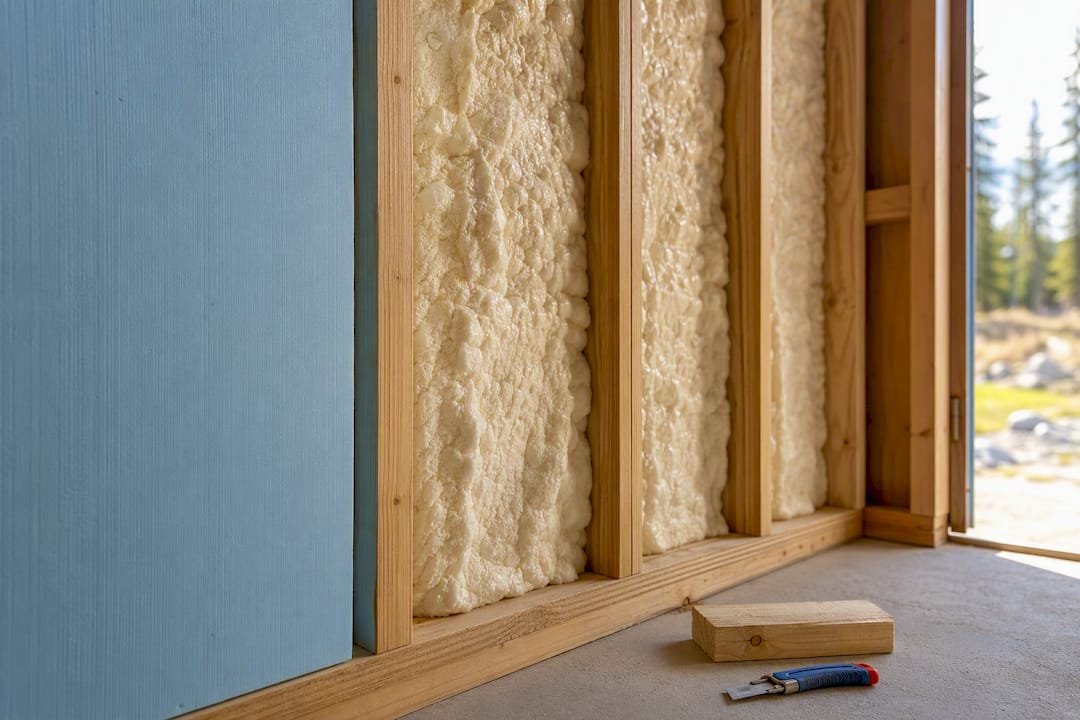
Slab prep matters as much as wall insulation. A layer of polyethylene sheeting under the slab reduces ground moisture migrating up into the building, which lightens the load on whatever ventilation you install later. Perimeter slab insulation helps in cold climates, but many small well houses skip it and lean on the earth’s own steady underground temperature instead, since a slab poured below frost depth stays warmer than the air above it.
Air-sealing details that get skipped and shouldn’t:
- Seal every pipe collar where plumbing passes through the wall or floor
- Weatherstrip the door, including the threshold, not just the jambs
- Foam or caulk every electrical penetration, conduit, and junction box entry
- Frame a solid backing board for mounting the pressure tank or controls so you’re not drilling new holes through the sealed envelope later
Builders working through GreenBuildingAdvisor’s well pump house discussions often recommend leaving the underside of the roof open to the interior rather than finishing a ceiling, which lets the small heated volume circulate freely and avoids trapping condensation in a hidden attic space.
Sizing a Heater and Heat Tape So Nothing Freezes
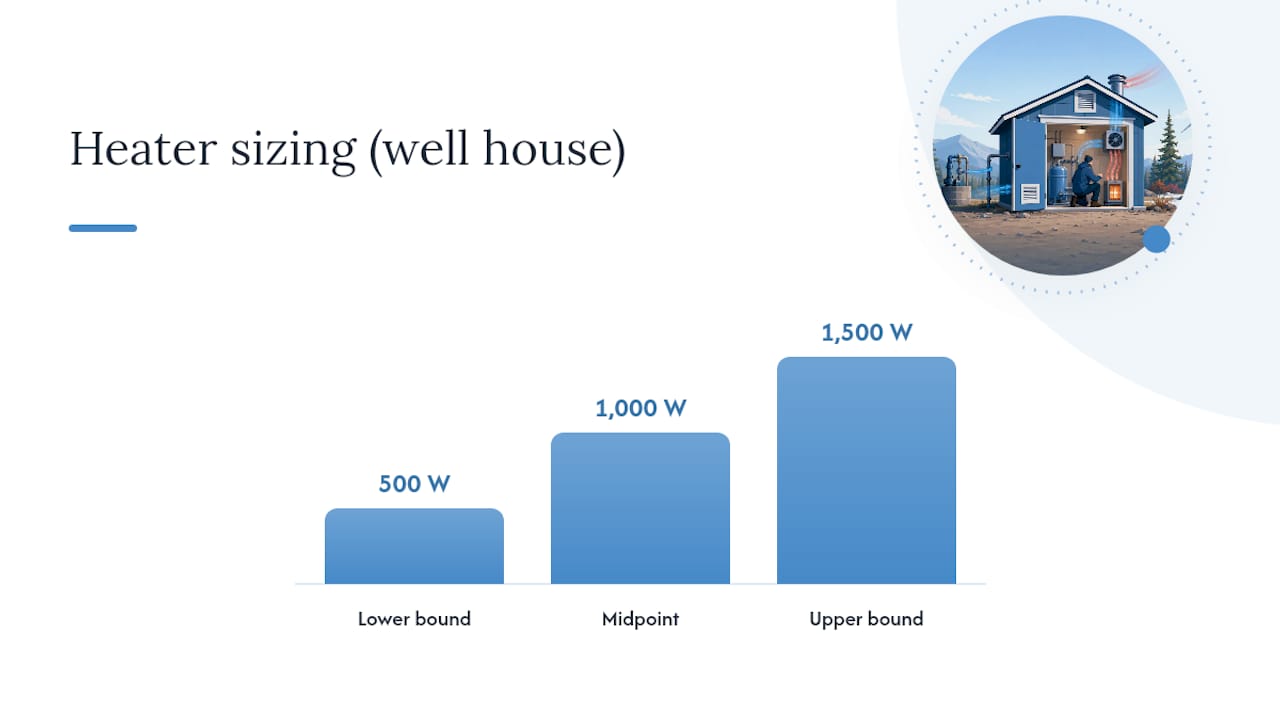
A small electric heater in the 500 to 1,500 watt range handles most well houses under a few hundred square feet, provided the shell is properly sealed and insulated first. Set the thermostat to hold the space around 40°F, comfortably above freezing without running the heater constantly. Trying to keep a well house at room temperature wastes power and shortens heater life for no real benefit.
Heat tape covers what a space heater can’t reach directly: the pipe runs themselves, especially anywhere plumbing passes near an exterior wall or through an unheated crawl space before it reaches the pressure tank.
- Use thermostatically controlled heat tape on any run considered critical, so it only draws power when pipe temperature actually drops near freezing
- Wrap heat tape directly against the pipe under insulation, never over the insulation where it loses effectiveness
- Check heat tape connections each fall before the season’s first hard freeze, since worn insulation on the tape itself is a fire risk
Pro Tip: If losing water pressure for even a day would be a real problem on your property, pair the heater with a battery backup or a small generator. A well house heater that shuts off during a winter power outage is the exact moment freeze damage happens.
Managing Condensation, Corrosion, and Moisture
Heating a sealed well house in winter creates a specific problem: warm air holds more moisture than cold air, and that moisture wants to condense the instant it touches a cold pipe fitting or metal surface. The fix isn’t less heat, it’s controlled air exchange. A small screened intake paired with a thermostatically triggered exhaust swaps humid indoor air for drier outside air in short bursts, without giving up the heat you’re paying to generate.
Ground moisture deserves the same attention as air moisture. Gravel drainage around the well head and slab perimeter keeps standing water away from the foundation, and that poly sheeting under the slab mentioned earlier does double duty here by keeping vapor from wicking upward through the concrete itself.
A short list of habits that head off corrosion before it starts:
- Choose stainless or coated hardware for anything near the pressure tank or fittings
- Wipe down visible metal surfaces once a season and note any new rust spots
- Keep a simple min-max thermometer mounted near the door so you can verify at a glance whether winter temperatures are staying where they should
Venting the Well Casing Safely
The well casing itself needs its own dedicated vent, separate from the building’s ventilation system, because wells can release naturally occurring methane or hydrogen sulfide gas. Guidance on venting methane from water wells is specific on this point: the well vent tube has to terminate outside the structure and above flood elevation, not just poke into the well house interior.
- Confirm the vent tube extends outdoors, is screened against insects, and sits above the flood line for your property
- If you ever smell a rotten-egg odor or notice unexplained headaches or dizziness while working inside, stop work, ventilate the space immediately, and leave
- Test for gas with a qualified well contractor before resuming any enclosed work in that structure
- Never store fuel, solvents, or other flammables inside a well house where gas accumulation is even a remote possibility, and use sealed, rated electrical fixtures if your well is known to produce gas
How Much Airflow Does Your Well House Actually Need?
Start with an air-change target. Small, lightly loaded well houses do fine around 5 to 15 air changes per hour, and you increase that range as heat load climbs from a bigger pump motor or an added heater. Convert ACH to CFM using your building’s volume: multiply length by width by height in feet, divide by 60, then multiply by your target ACH number. A 6 by 8 foot well house with an 8 foot ceiling runs about 384 cubic feet, which puts a 10 ACH target at roughly 64 CFM, well within what a small exhaust fan handles easily.
Grid-connected sites do best with a standard thermostatic AC exhaust fan sized to that CFM number. Remote or off-grid sites are a better match for a low-voltage DC fan or solar fan kit paired with a small battery, since running new wire to an isolated well house often costs more than the fan itself. Westernharmonics built out a 7 step CFM sizing method originally for pump houses that maps directly onto this same math.
- Match fan CFM to your calculated need, then round up slightly rather than down
- Set the thermostat or humidistat to trigger a few degrees below your comfort threshold, not right at it, so the fan doesn’t short-cycle
- If a fan is battery-backed, size the battery for at least a full day of expected run time before assuming grid power will always be there to recharge it
Pro Tip: When pairing a solar fan kit with a battery for a remote well house, check the battery’s own venting requirements. Battery venting rules matter just as much as airflow rules once you’re storing energy on site.
Seasonal Maintenance Checklist for Well House Ventilation
A well house earns its keep with five minutes of attention a few times a year, not a full inspection every week.
- Clear vent screens of debris, spider webs, and dust each spring and fall
- Test the heater and thermostat before the first cold snap, not during it
- Inspect heat tape for worn insulation or loose wrap along pipe runs
- Check for condensation on fittings and any new rust or mineral streaking on hardware
- If condensation shows up despite a working fan, increase your ACH target or add a small heater to shift the dew point
- If the pump motor runs hot to the touch, check both ventilation and ambient temperature before assuming the pump itself is failing
- Call a licensed electrician for any wiring work near the well casing, and a licensed well contractor anytime gas is suspected or the casing vent needs inspection
Where Solar Ventilation Fits in a Well House Plan
Some companies built their first solar fan kits for exactly this kind of problem: small enclosures far from grid power that still need reliable airflow. We’ve seen solar and DC fan setups work best on remote well houses where trenching wire isn’t practical, while grid-powered thermostatic fans still make more sense for well houses already wired near the house panel. Our pump house cooling guide walks through the install details.
— Chris
Matching Westernharmonics Hardware to Your Well House Plan
There are options for a well house that sits too far from the panel to justify trenching new wire, including solar fan kits built to close this gap. For a small well house under a couple hundred CFM, the 10W Solar Powered Fan Kit covers low intake or exhaust duty without any grid connection at all. If your CFM math from the sizing section above lands higher, or you want separate intake and exhaust fans running together, the Solar Power 2 Fan System covers that load, and the 200W Solar Hanging Fan Kit with battery backup adds stored capacity for nights or cloudy stretches when a well house still needs to breathe.

Grid-powered sites with an existing electrical run are often better served by a standard thermostatic AC fan instead, and that’s a fair call if the wiring is already there. But for anything remote, browse the full solar fan catalog and match a kit’s rated CFM to the air-change target you calculated earlier before you order.
Sources
- Build tight, ventilate right — U.S. Department of Energy (EERE)
- Whole-house ventilation systems — ORNL / EERE fact sheet (ASHRAE guidance summary)
- Insulation and venting for a well pump house — GreenBuildingAdvisor Q&A
- Methane gas and your water well — well-venting guidance (state/federal fact sheet)