

Barn Solar Wiring Code: NEC Rules You Cannot Skip
Barn Solar Wiring Code: NEC Rules You Cannot Skip
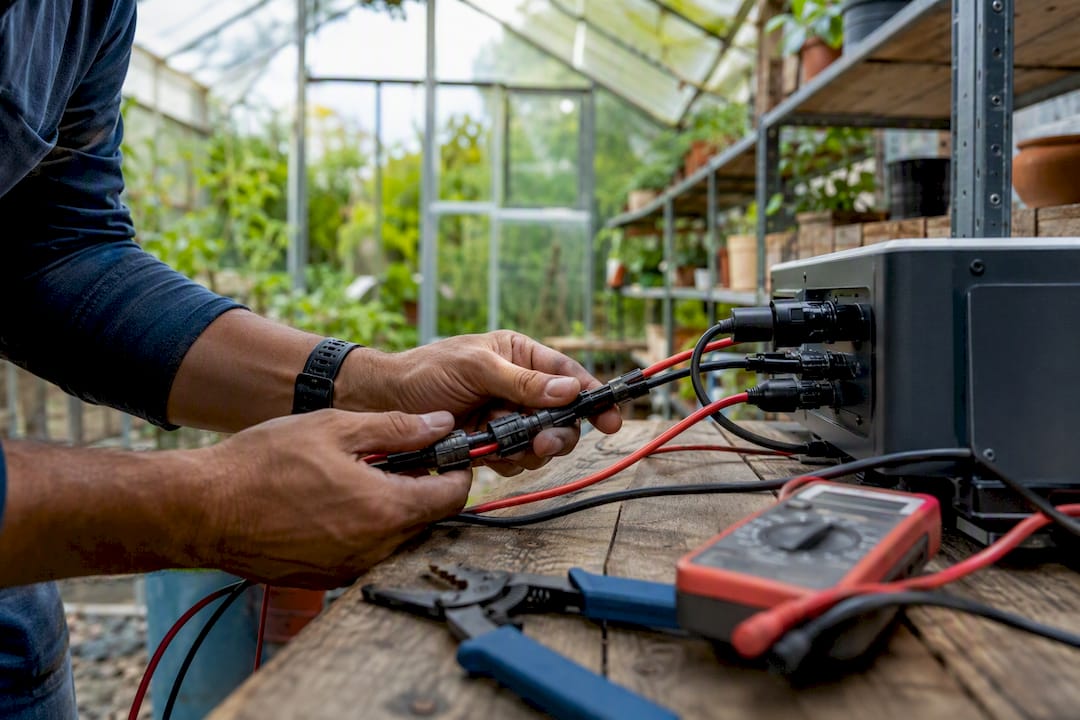
Short answer: comply with NEC Article 690 for photovoltaic systems, Article 547 for agricultural buildings, and the 690.12 rapid shutdown rule, then get a licensed installer and your local Authority Having Jurisdiction (AHJ) to sign off before you flip the switch. Those three code sections govern almost every wiring decision you’ll make on a barn solar project, from conductor size to how you bond the water trough.
Before you touch a wire, handle three things:
- Call your AHJ and ask what permit package they want for a detached agricultural building with solar.
- Specify rapid-shutdown equipment and labeled disconnects rated for outdoor, dusty, or wash-down conditions.
- Plan grounding, bonding, and an equipotential plane anywhere livestock can contact metal or damp flooring.
Key Takeaways
Barn solar compliance rests on satisfying NEC Article 690, Article 547, and the 690.12 rapid shutdown rule together, not treating any one of them as optional.
| Point | Details |
|---|---|
| Confirm applicable articles | Article 690 governs PV design, Article 705 governs interconnection, and Article 547 governs agricultural wiring methods. |
| Design for cold-weather voltage | Correct Voc for your coldest recorded temperature before finalizing string sizing and conductor selection. |
| Document rapid shutdown | Show your 690.12 method and disconnect labeling clearly on submitted plans for the AHJ. |
| Prioritize equipotential planes | Bond racking, frames, and grounding electrodes wherever livestock contact damp flooring near equipment. |
| Choose barn-rated cable | Use UF, jacketed MC, or SE cable with corrosion-resistant fittings instead of standard NM in animal areas. |
Table of Contents
- What barn solar wiring code actually covers
- The technical limits that shape your design
- Rapid shutdown and firefighter safety, explained plainly
- Grounding, bonding, and why livestock areas are different
- Cable, conduit, and keeping rodents out of your wiring
- Getting your permit approved the first time
- Your compliance checklist before, during, and after install
- Where to get hands-on help with your barn system
- Why the code gets treated as an afterthought, and shouldn’t
- Sources
What barn solar wiring code actually covers
Three NEC articles do the heavy lifting on any barn solar wiring code question. Article 690 governs the PV system itself: voltage limits, conductor sizing, disconnects, and rapid shutdown. Article 705 covers how that PV system interconnects with another power source, whether that’s the grid or a standby generator. Article 547 governs agricultural buildings generally, and it’s the one most solar guides skip, even though it dictates which cable types you’re allowed to run through a barn at all.
For barns specifically, Article 547 changes the game in three ways:
- It restricts wiring methods to types built for dust, moisture, and corrosive vapors, which rules out plain NM cable in most animal areas.
- It requires equipotential planes in areas where livestock stand on damp concrete or dirt near metal equipment.
- It triggers rapid-shutdown and interconnection rules from Articles 690 and 705 the moment you add PV, even if the barn’s existing wiring was grandfathered in.
The technical limits that shape your design
Three numbers drive most conductor and equipment decisions under NEC Requirements for Solar. Residential-scale PV systems generally cap DC voltage at the limit allowed by code for residential buildings, while larger arrays can reach higher voltages subject to code requirements, often requiring a licensed electrical engineer’s involvement to stamp the design. Cold weather pushes panel open-circuit voltage (Voc) higher than the rated spec, so every string calculation needs a temperature correction factor, not just the nameplate number.
Three design rules matter most once you start pulling wire:
- Conductor sizing follows the 125% rule for continuous current, and you derate further when more than three current-carrying conductors share a conduit.
- Overcurrent protection devices go where conductor ampacity drops below the connected load, typically at the combiner box and again at the main service.
- Arc-fault protection is required for DC circuits on or in a building operating at 80VDC or higher, per 690.11.
Pro Tip: Order your Voc calculation for the coldest recorded temperature at your site, not a national average. A barn in International Falls and one in Amarillo need very different string sizes off the same panel spec sheet.
Rapid shutdown and firefighter safety, explained plainly
A solar panel makes electricity the moment light hits it. You can’t switch that off, which is exactly why the Ohioline fact sheet on farm solar safety explains that 690.12 exists to limit energized conductors to 10 feet outside the array or 5 feet inside a building once shutdown is initiated. That’s a firefighter protection, not a suggestion.
Common ways installers meet the requirement:
- Module-level power electronics (MLPE), such as microinverters or DC optimizers, that de-energize each panel individually.
- A rapid-shutdown initiator mounted at a readily accessible location, usually near the main service disconnect.
- Clear labeling at every disconnect and junction point showing where shutdown controls are located.
Detached equipment buildings sometimes qualify for placement exceptions, but don’t assume yours does. Treat every PV conductor as permanently energized on your plans, and document your rapid-shutdown method in writing for the AHJ.
Grounding, bonding, and why livestock areas are different
Stray voltage that a person would never notice can make a cow refuse to drink from a metal trough or a horse shy away from a stall gate. That’s the practical reason equipotential planes exist under Article 547: they tie all the metal a large animal might contact to the same reference potential, so no path exists for current to flow through the animal’s body.
Building one correctly means:
- Bonding racking, module frames, and combiner enclosures to a common grounding electrode system.
- Sizing the grounding electrode conductor per NEC tables based on your largest ungrounded conductor, not a guess.
- Adding a second ground rod or bonding to the barn’s existing distribution point when soil conditions or run length demand it.
Industry guidance on agricultural buildings treats equipotential bonding as a baseline expectation wherever livestock share space with grounded equipment, not an upgrade you add later. Article 547 also expects site-isolating devices in some configurations, so ask your AHJ early whether your specific layout needs one.
Cable, conduit, and keeping rodents out of your wiring
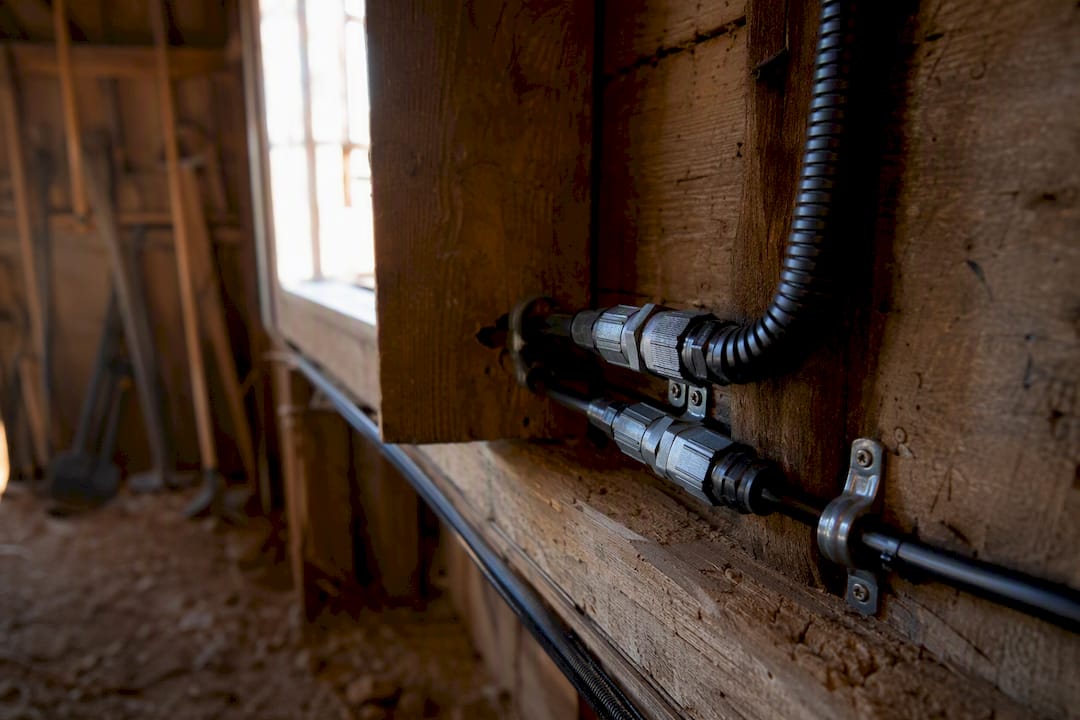
Standard NM cable is prohibited in most barn interiors, and for good reason: it isn’t rated for the dust, moisture, and ammonia vapor a working barn produces. Article 547 steers you toward UF cable, jacketed MC cable, SE cable, or NMC where local code allows it, all chosen because their jackets resist the corrosive environment.
For exposed runs and anything underground, conduit is your friend, but it comes with math attached:
- Conduit fill limits and conductor derating both tighten once you add more than three current-carrying conductors, so oversize the conduit rather than fight the fill table later.
- Buried conduit needs adequate depth and physical protection where equipment or animals could crush it.
- Corrosion-resistant fittings and secured, supported cable runs cut down on inspection failures and reduce the odds of an animal chewing through exposed jacketing.
Our own field notes on protecting photovoltaic wiring in barns cover rodent and moisture protection in more depth if you’re planning a DIY run.
Getting your permit approved the first time
Bring your AHJ a complete package on the first visit: a one-line diagram, conductor sizes with supporting calculations, equipment spec sheets, and a written description of your rapid-shutdown method. Inspectors see the same mistakes over and over, and a forum thread documenting a 4.6kW barn PV install shows how often combining PV and feeder conductors in one conduit, or getting neutral/ground bonding wrong at a subpanel, stalls approval.
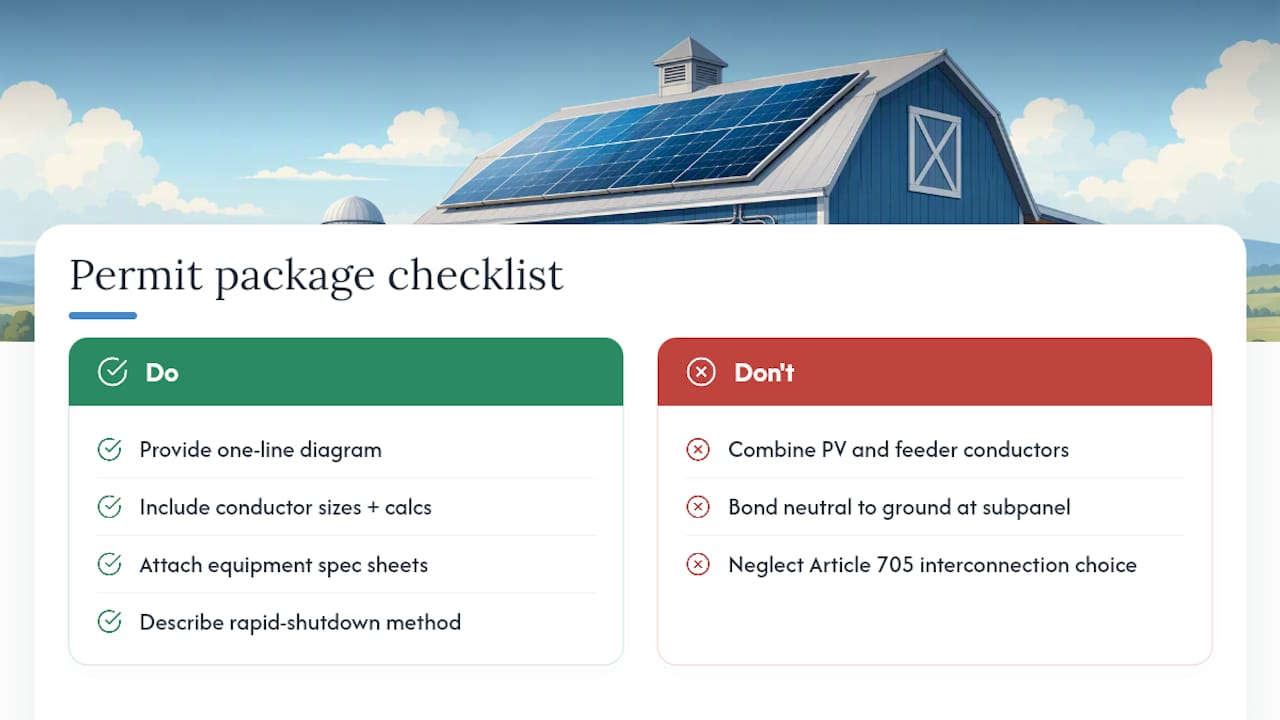
Interconnection under Article 705 also matters here. Decide early whether you’re doing a supply-side or load-side connection to the utility, since that choice affects your equipment list and your utility’s own permission-to-operate paperwork.
Your compliance checklist before, during, and after install
- Pre-install: Contact the AHJ, prepare your one-line diagram, gather equipment data sheets, and complete voltage and ampacity calculations.
- During install: Install labeled disconnects, size conductors correctly, complete bonding and grounding, and protect wiring physically from moisture and rodents.
- Final: Confirm rapid shutdown functions as designed, verify all labels are in place, get inspector sign-off, and secure utility permission to operate.
Where to get hands-on help with your barn system
A few things we’ve learned building off-grid hardware for working barns: corrosion-resistant connectors pay for themselves within a season, and cable routed along a joist beats cable resting on a dirt floor every time an animal or a shovel comes through. Low-voltage DC distribution has its own bonding logic worth understanding before you wire a barn from scratch, covered in our 12V DC distribution guide. If you’re pairing panels with battery storage for barn loads, our solar and battery systems page walks through compatible components for low-voltage setups.
Why the code gets treated as an afterthought, and shouldn’t
Most solar wiring guides online are written for rooftop residential jobs, then loosely adapted for barns as an afterthought. That’s backwards. A barn isn’t a house with animals in it. It’s a corrosive, dusty, sometimes wet environment where the wrong cable jacket or a missing equipotential plane doesn’t just fail an inspection. It can hurt livestock or start a fire nobody can find the source of because a firefighter didn’t know where rapid shutdown had been implemented.
The conventional advice, size your array, pick a panel brand, wire it up, undersells how much Article 547 changes the calculus before you even get to Article 690’s voltage math. If you take one thing from this piece, prioritize the grounding and cable-type decisions first. They’re the parts of the job an AHJ will catch on inspection day, and they’re also the parts that protect animals and buildings long after the inspector leaves. Everything else, conductor sizing, OCPD placement, rapid-shutdown model, is solvable with a calculator and a spec sheet. Livestock safety and moisture protection require you to actually understand the barn you’re wiring, not just the panels going on the roof.
— Chris