

USDA REAP Grant Solar Funding: What Producers Need to Know
USDA REAP Grant Solar Funding: What Producers Need to Know
Yes, USDA REAP solar grants are currently available to eligible agricultural producers and rural small businesses, and applications are being accepted under the fiscal year 2025–2026 funding cycle. Grant awards through the Rural Energy for America Program can cover up to 50% of eligible project costs, a share that rose from the pre-Inflation Reduction Act cap of 25%.
- Administered by: USDA Rural Development
- Typical maximum grant share: up to 50% of eligible costs (loan guarantees add up to 75% combined)
- First step: contact your State Energy Coordinator and confirm your SAM registration before drafting anything
Key Takeaways
USDA REAP solar grants remain open to eligible agricultural producers and rural small businesses, covering up to 50% of eligible project costs when paired with strong technical documentation.
| Point | Details |
|---|---|
| Funding is active | REAP accepts applications under the FY2025 to 2026 funding cycle with grants up to 50% of eligible costs. |
| Register early | Complete SAM registration and secure a Unique Entity ID before drafting any application materials. |
| Documentation wins awards | Strong ROI calculations, signed contractor quotes, and accurate kWh estimates drive competitive scoring. |
| Small systems qualify | Solar fan kits and greenhouse ventilation can qualify with proper spec sheets and savings documentation. |
| Westernharmonics supplies application materials | We provide spec sheets, PowerMosaics design outputs, and installation quotes for REAP-eligible equipment. |
Table of Contents
- What Is REAP and How Does the Solar Funding Work?
- Who Qualifies for a REAP Solar Grant?
- How Much Can a REAP Solar Grant Cover?
- What’s the Application Process and Timeline?
- How Are REAP Applications Scored?
- Can You Combine REAP Grants With Other Financing?
- What Have Past REAP Solar Projects Actually Saved?
- Do Small Off-Grid Solar Kits Qualify for REAP?
- Why Farm-Scale Solar Is a Natural REAP Fit
- How Westernharmonics Supports Your REAP Application
- Where to Find Official REAP Forms and Guidance
- Frequently Asked Questions
- Sources
What Is REAP and How Does the Solar Funding Work?
The Rural Energy for America Program is a USDA Rural Development initiative that funds renewable energy systems and energy efficiency upgrades for agricultural producers and rural small businesses. It runs two distinct funding tracks, and knowing which one fits your project saves time.
- Grants (RES and EEI): Renewable Energy Systems grants cover new solar installations; Energy Efficiency Improvement grants cover upgrades like better lighting or refrigeration. Neither requires repayment.
- Guaranteed loans: USDA backs a private lender’s loan, useful when a project’s total cost exceeds what grant funding alone will cover.
The Inflation Reduction Act pumped new money into REAP and raised the grant funding share, which is why current awards look more generous than they did a decade ago.
Who Qualifies for a REAP Solar Grant?
Two separate tests apply: one for the applicant, one for the project. Miss either and the application gets rejected before anyone reads your technical specs.
- Agricultural producers: at least 50% of gross income must come from agricultural operations.
- Rural small businesses: must be located in an eligible rural area (population under 50,000, generally) and meet Small Business Administration size standards.
- Registration: every applicant needs an active Unique Entity ID and SAM registration before submission, not after.
- Project scope: solar PV systems, solar-plus-storage, and some agrivoltaic setups typically qualify; purely speculative or unrelated equipment purchases don’t.
- Application limits: one RES and one EEI application per fiscal year, with combined caps applied across affiliated entities to prevent one ownership group from stacking multiple awards.
How Much Can a REAP Solar Grant Cover?
Grant awards can reach up to one million dollars for renewable energy systems and up to five hundred thousand dollars for energy efficiency projects, though most agricultural-scale solar installations come in well under those ceilings. The funding-share rules allow grants to cover up to 50% of eligible project costs, and combining a grant with a guaranteed loan can push total federal support to 75%.
Eligible costs generally include:
- Solar panels, inverters, and racking hardware
- Balance-of-system components (wiring, disconnects, mounting)
- Structural roof work directly tied to supporting the solar array
Costs that usually get denied include standalone new construction (a roof built for reasons unrelated to solar) and general-purpose equipment not tied to the renewable energy system itself. Reaching the full 50% share often requires additional documentation, including a feasibility study for larger projects and, in some cases, a greenhouse gas reduction calculation. Some underutilized technology categories carry funding set-asides worth checking with your coordinator.
What’s the Application Process and Timeline?
Applying for a REAP solar grant follows a defined sequence, and skipping steps is the single fastest way to stall your file.
- Contact your State Energy Coordinator. This is a USDA Rural Development state-office contact, and engaging early helps align your application with state-level priorities.
- Register in SAM and obtain a Unique Entity ID. Do this weeks ahead of your deadline. It’s a bureaucratic step, not a technical one, but it blocks everything downstream if skipped.
- Prepare technical and financial documents, including a site plan, contractor quotes, and a feasibility study if your project size requires one.
- Complete the required forms. The RD4280 series application forms are hosted on USDA’s eForms portal, and submission runs through the MyRDLoan portal or your state office.
- Environmental review. USDA checks for environmental impact before finalizing any award.
- Award and contracting. Once approved, you’ll receive formal notification and begin the contracting process.
Filing windows and program priorities change year to year, so check the Federal Register NOFO for the current fiscal year’s exact deadlines. Missing SAM registration, submitting vague technical specs, and turning in incomplete cost quotes are the three most common causes of avoidable delay.
How Are REAP Applications Scored?
REAP is competitive, and USDA scores applications against several factors: projected energy savings or generation, project readiness, cost-effectiveness, technical feasibility, and rural economic impact. A weak application isn’t necessarily an ineligible one. It’s usually just underdocumented.
Six things consistently strengthen a REAP solar application:
- A professional technical system design rather than a rough sketch
- A clear return-on-investment and payback period calculation
- An accurate kWh production and savings estimate, not a rounded guess
- Signed, itemized contractor quotes instead of verbal estimates
- Documentation showing environmental compliance is already handled
- A short narrative on the rural economic benefit the project creates
Pro Tip: Request a pre-application review from your State Energy Coordinator before you submit. Reviewers can flag weak sections while you still have time to fix them, and that conversation alone has saved plenty of applicants from a rejected first attempt.
Can You Combine REAP Grants With Other Financing?
Combining a REAP grant with a guaranteed loan lets you reach up to 75% total federal support on a project, which matters most for larger installations that exceed what a grant alone will cover. On a hypothetical $100,000 solar system, a 50% grant covers $50,000, and a guaranteed loan on the remaining balance can close most of the rest.
- Coordinate financing timing with the federal Investment Tax Credit; a tax advisor should review the sequencing before you finalize any loan documents, since grants and guaranteed loans work together as part of a broader financing strategy.
- Watch aggregated funding caps across affiliated entities and the one-RES-one-EEI-per-fiscal-year limit before assuming you can layer multiple awards.
What Have Past REAP Solar Projects Actually Saved?
USDA reported in 2024 that REAP investments have lowered energy bills by an average of about $25,000 per project across more than 7,500 awarded projects since 2021, representing over $2.2 billion in REAP funding.
- A 2024 announcement backed 338 clean energy projects across 39 states and Guam with $163 million in combined loans, grants, and technical assistance.
- A funding round distributed millions of dollars in grants across hundreds of projects, with awards supporting a range of system sizes.
- Small greenhouse and barn-scale solar tends to land toward the lower end of that savings range, while larger operations report higher absolute dollar savings but similar percentage reductions in energy costs.
Do Small Off-Grid Solar Kits Qualify for REAP?
Small systems, including solar-powered fan kits and greenhouse ventilation, can qualify for REAP when the paperwork demonstrates measurable energy production or savings. The size of the system matters less than the quality of documentation behind it.
What a small-system application needs:
- Equipment spec sheets showing panel wattage, battery capacity if included, and expected output
- A signed installation quote from a contractor
- A calculated kWh savings or production estimate tied to your specific operation
- If your total project is small, consider whether aggregating multiple installations (several barns, several greenhouse bays) strengthens the case for a single application
Westernharmonics supplies spec sheets, ROI calculations, and equipment quotes for products like solar barn ventilation systems and greenhouse exhaust fan kits, the kind of documentation reviewers expect to see attached to a technical feasibility section.
Pro Tip: Attach a formal kWh savings estimate and a system-design printout from a tool like PowerMosaics to your technical feasibility section. A clean, professional output does more to convince a reviewer than a paragraph of description ever will.
Why Farm-Scale Solar Is a Natural REAP Fit
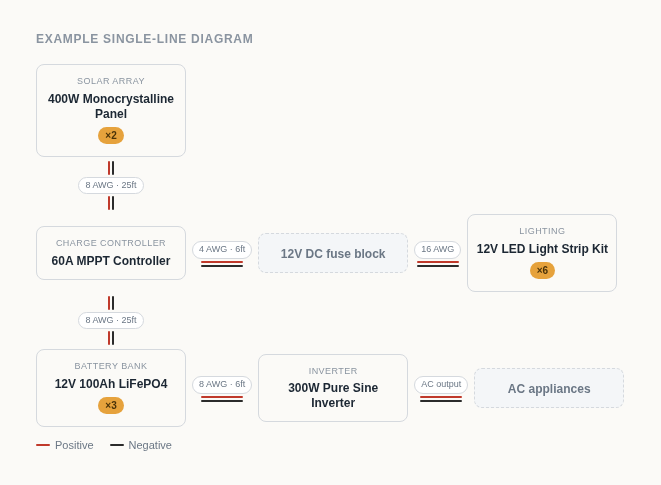
Rooftop and small-field solar make sense for REAP because the program was built for exactly this scale of operation: barns, greenhouses, and rural workshops running on unreliable or nonexistent grid power. If you’ve been putting off the paperwork, the SAM registration and State Energy Coordinator conversation are the two steps to start this week, not after you’ve finalized a system design.
A short system-design evaluation before you apply changes the strength of your submission more than almost anything else. That’s where a tool like PowerMosaics compares favorably to other DC and low-voltage design software built for systems under 3kW, output that’s specific enough for a reviewer to trust.
How Westernharmonics Supports Your REAP Application
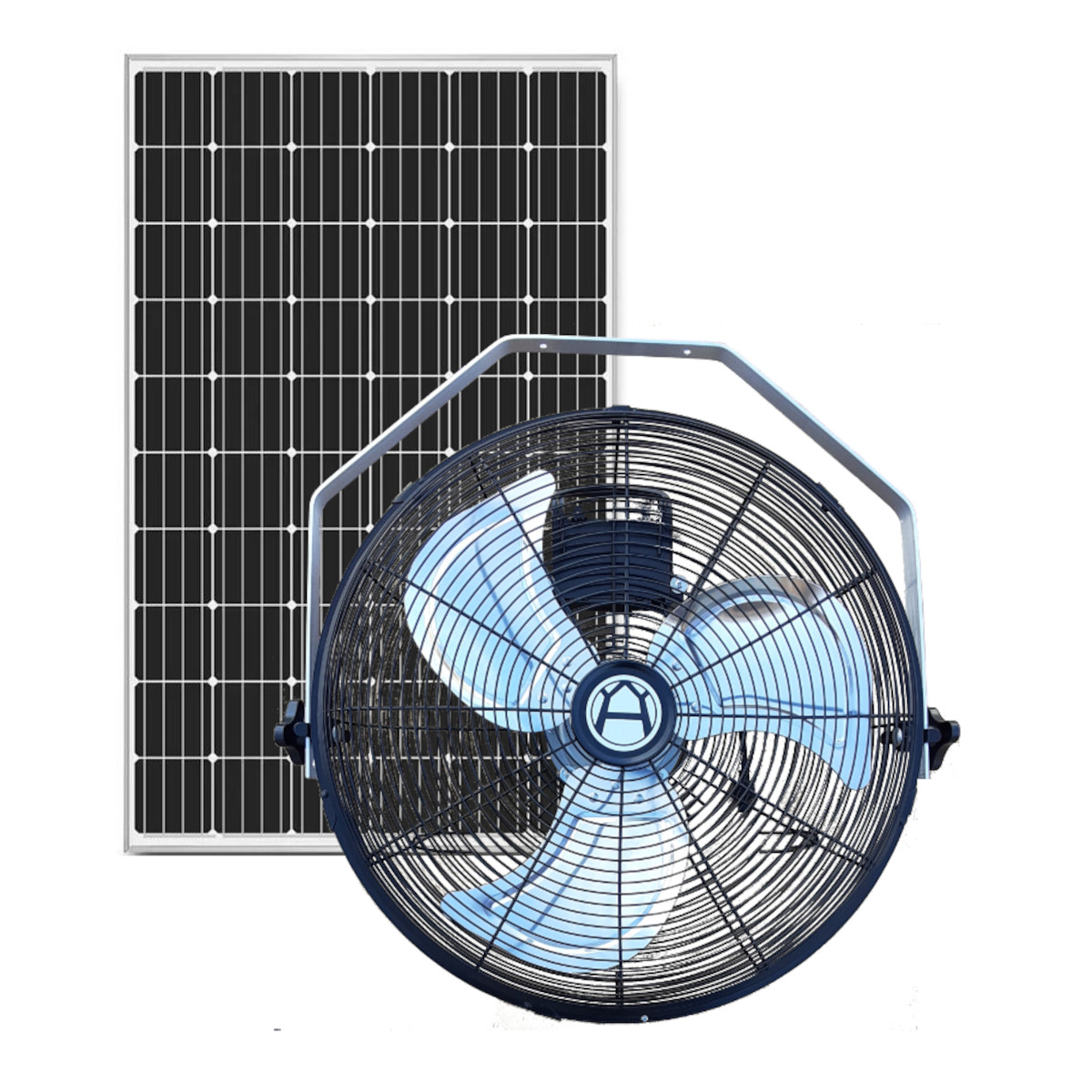
Westernharmonics built its business on solar-powered fan kits and off-grid cooling hardware for exactly the barns, greenhouses, and rural workshops that REAP was designed to fund. That background means we can hand you documentation reviewers actually want to see, not generic marketing sheets.
For agricultural producers preparing a REAP application, we provide:
- Equipment spec sheets for solar fan kits, ventilation systems, and battery-backed cooling hardware
- PowerMosaics system-design outputs showing projected kWh production for small and mid-size installations
- Installation quotes and bills of materials sized to your project
- kWh production and savings estimates you can drop straight into your technical feasibility section
Browse the solar and battery systems catalog to see which configurations fit your barn, greenhouse, or workshop, and pull the spec sheets you’ll need before your next call with your State Energy Coordinator.
Where to Find Official REAP Forms and Guidance
Start with the program pages themselves, then verify deadlines before you file anything.
- USDA REAP program page for program rules and eligibility
- Federal Register NOFO for year-specific deadlines and priorities
- RD4280 application forms for the paperwork itself
- MyRDLoan portal for submission and account management
Confirm current deadlines with your State Energy Coordinator, since the NOFO’s filing windows shift each fiscal year.
Frequently Asked Questions
Is USDA REAP grant solar funding still available in 2026? Yes. REAP operates under the FY2025–2026 Notice of Funding Opportunity, and applications continue on a rolling basis tied to that window’s specific deadlines.
What’s the maximum REAP solar grant amount? Renewable energy system grants can reach up to $1 million, while energy efficiency improvement grants cap at $500,000, though most on-farm solar projects request far less.
Can I apply for REAP if I already have a small solar setup, like a fan kit? Yes, as long as you document the project’s expected kWh savings or production with spec sheets and a signed installation quote.
Do I need a professional system design to apply? It’s not strictly mandatory for every project, but a technical design output like a PowerMosaics printout significantly strengthens the feasibility section reviewers evaluate.
How long does the REAP application process take? Timelines vary by state office and NOFO cycle, but budgeting several months from initial State Energy Coordinator contact to award notification is realistic.
This article is general information, not a substitute for advice from a qualified financial advisor. Consult a qualified financial professional about your own circumstances before acting on anything here.
Sources
- Rural Energy for America Program Renewable Energy Systems & Energy Efficiency Improvement Guaranteed Loans | Rural Development
- Notice of funding opportunity for the Rural Energy for America Program for fiscal years 2025–2026 | Federal Register
- Forms