

Cut Barn Ammonia 30 to 50%: At Source Fixes for Barn Managers
Cut Barn Ammonia 30 to 50%: At Source Fixes for Barn Managers
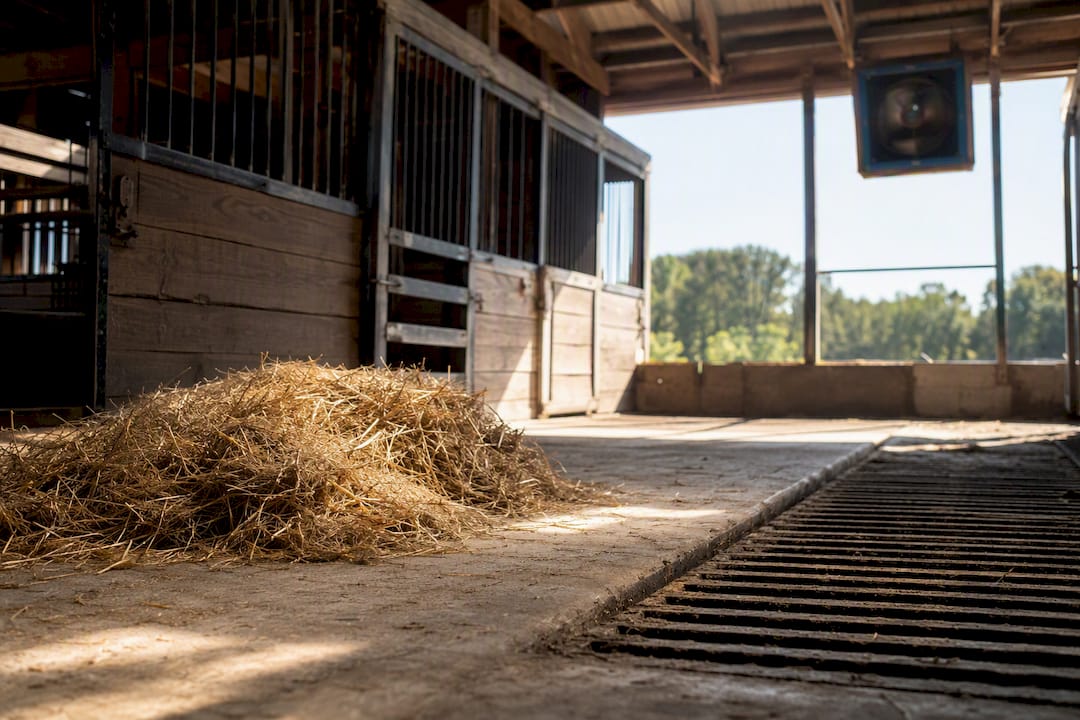
Combining at-source controls (manure removal, floor design, diet and litter management) with proactive ventilation is the single highest-return move you can make against barn ammonia, typically cutting levels by 30 to 50 percent in dairy facilities. Swine operations that pair feed changes with ventilation upgrades have seen reductions as high as 81.7%. A solar fan kit from a company like Westernharmonics lets you run that proactive airflow around the clock, even in barns without reliable grid power.
TL;DR:
- Combining manure removal, floor design, diet, and ventilation can reduce barn ammonia levels by 30 to 81.7 percent, depending on the operation.
- Proactive, scheduled ventilation keeps humidity below 70 percent, which significantly slows ammonia volatilization and is more effective than reactive measures.
- Shortening manure residence time through increased cleaning, slatted floors, or covers is essential for lowering ammonia formation at the source.
- Using acidifiers, alum, or urease inhibitors in litter management can cut ammonia emissions by up to 40 percent, provided they do not irritate animals or require overapplication.
- Solar fan kits offer reliable, cost-free airflow in barns lacking grid power and enhance ventilation timing to prevent humidity and ammonia buildup overnight.
Table of Contents
- Why Reducing Barn Ammonia Is Worth the Effort
- What Creates Ammonia in a Barn?
- How Do You Ventilate a Barn to Cut Ammonia?
- Manure Removal Schedules and Floor Design That Cut Ammonia at the Source
- Feed, Litter, and Bedding Adjustments That Lower Ammonia Output
- When Do Scrubbers and Biofilters Make Sense?
- How Do You Monitor Ammonia and Humidity Levels?
- Solar Ventilation and What a Real Barn Install Looks Like
- A Barn Manager’s Ammonia Reduction Checklist
- Where Western Harmonics Fits in Your Ammonia Plan
- The Overlooked Piece Most Ammonia Advice Skips
- Sources
Why Reducing Barn Ammonia Is Worth the Effort
Ammonia does real damage before you ever smell it. Concentrations that seem tolerable to a human nose already stress the respiratory tissue of livestock, and chronic exposure in poultry and swine houses is tied to slower growth, lower feed efficiency, and higher susceptibility to respiratory disease. Workers who spend hours in high-ammonia barns face the same irritation, from headaches to chronic airway inflammation.
There’s a second cost that’s easy to miss: every pound of ammonia that escapes into the air is nitrogen you paid for in feed and fertilizer, gone. That nitrogen never reaches your fields as manure value. Combined manure and ventilation strategies that cut emissions by 30 to 50 percent aren’t just an air-quality fix. They’re a way to keep more of that nitrogen where it’s useful, in your soil instead of your rafters.
Neighbors and regulators notice ammonia odors long before they notice a compliance report. Barns that manage ammonia proactively tend to have fewer complaints and fewer surprise inspections. That alone is reason enough to treat this as routine barn management, not an emergency response.
What Creates Ammonia in a Barn?
Ammonia doesn’t come from manure directly. It forms when urease, an enzyme present in feces, breaks down the urea in urine. That reaction happens fast, often within hours, once urine and feces mix on a barn floor. Keep them separated, or remove them before that contact lingers, and you choke off the reaction at its source.
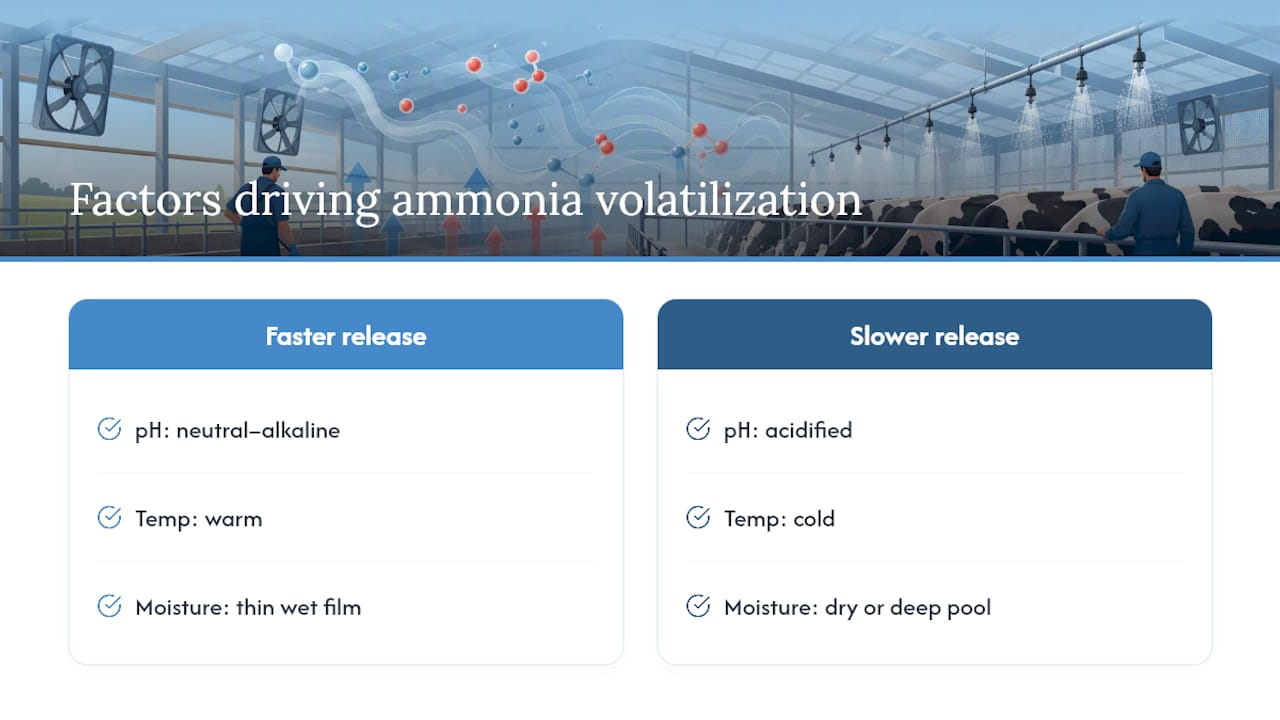
Three environmental factors control how fast that reaction runs. Higher pH speeds volatilization, which is why fresh manure with a neutral-to-alkaline surface releases ammonia faster than manure that’s been acidified. Warmer temperatures push more ammonia into gas form rather than staying dissolved in slurry. Moisture matters too, but not in the direction most people assume: a thin, wet film on a barn floor volatilizes ammonia faster than either dry manure or a standing pool deep enough to trap gas underneath.
Management choices layer on top of that chemistry. Feeding stage affects how much nitrogen animals excrete in the first place, since diets formulated for peak production often carry more protein than the animal can use. Bedding that’s gone from absorbent to saturated stops buffering moisture and starts adding to it. And ventilation timing matters more than most managers assume. Running fans only when ammonia becomes noticeable is already too late, because the humid, warm conditions that trigger volatilization have had hours to build.
How Do You Ventilate a Barn to Cut Ammonia?
Reactive ventilation, waiting until you smell ammonia or a monitor flags a spike, is the most common mistake in barn management. By the time you notice it, humidity has already climbed past the point where volatilization accelerates. Scheduled, proactive ventilation that runs before conditions peak keeps the air moving out ahead of the problem instead of chasing it.
Relative humidity above 70% is the tipping point where ammonia release ramps up fast, which is why the 50 to 70% range poultry operations target works as a broader benchmark across species. Once you’re inside that band consistently, ammonia formation slows on its own, no matter what floor or feed changes you’ve made.
Cold weather tempts a lot of managers to close things up and conserve heat. That’s backwards. Bringing in drier outside air, even if it means running a heater to warm it, controls ammonia far more effectively than minimizing ventilation to save on heating costs. Moisture control wins over heat conservation every time ammonia is the concern.
A few tactical details make a real difference in how well ventilation performs:
- Use low-velocity, targeted airflow over alleys and pits rather than one high-speed fan blasting the whole barn, which just stirs ammonia around instead of removing it.
- Install hooded extraction directly over manure pits or high-moisture zones so gas gets pulled out before it disperses through the barn.
- Adjust fan schedules seasonally. Summer ventilation needs differ from winter needs, and a fixed timer setting rarely fits both.
- Check fan blades, shutters, and intake vents monthly. Dust buildup on a barn fan can cut airflow by a third without any obvious sign from the outside.
Pro Tip: Set your ventilation to run in short, frequent cycles rather than long stretches, especially overnight. Barns build humidity fastest during the hours nobody’s watching, and a fan that kicks on automatically before dawn catches that buildup before it turns into an ammonia problem.
Manure Removal Schedules and Floor Design That Cut Ammonia at the Source
The longer urine and feces sit together, the more ammonia they produce. Shortening that residence time is the most direct lever you have, and it costs nothing but labor and scheduling discipline.
- Increase cleaning frequency where volume allows it. Daily manure removal in high-density housing keeps urease reactions from ever fully ramping up, compared to every-other-day or weekly schedules.
- Choose floor geometry that drains urine away from solids. Slatted or perforated floors let liquid pass through immediately, separating it from feces before the urease reaction has a chance to start. Slopes as shallow as two percent toward a drain channel make a measurable difference in how much liquid pools versus flows.
- Match your removal method to your floor type. Standard scrapers can actually make things worse: they often smear a thin film of slurry across the floor instead of lifting it clear, and that thin film volatilizes ammonia faster than either a thicker layer or a clean, dry surface. Flushing systems avoid the smearing problem but use more water and need a place to send it. Rubber mats paired with regular scraping reduce the smear effect substantially.
- Manage pits with a water layer or a cover, not an open surface. A shallow water layer under slatted floors reduces the surface area exposed to air, and covered pits cut volatilization further by limiting airflow directly over the slurry.
- Consider urine-separation systems in new construction or major renovations. Separating urine from feces at the point of excretion, rather than after the fact, is the most effective structural change available, though it’s a bigger investment than adjusting a cleaning schedule.
Extension guidance backs this up directly: straw covers on open corrals cut ammonia emissions by roughly 40%, and impermeable covers on manure storage can reduce emissions from the storage surface by 80 to 95%. Floor design and storage management aren’t secondary details. They’re where a lot of your ammonia reduction budget should go first.
Feed, Litter, and Bedding Adjustments That Lower Ammonia Output
You can reduce how much nitrogen an animal excretes in the first place, which means less raw material for ammonia formation before ventilation or manure handling even enter the picture. Phase feeding, matching protein and amino acid levels to an animal’s actual growth stage rather than feeding one formulation across the whole cycle, cuts excess nitrogen that would otherwise pass straight through as urea. Swine operations using feed-based nitrogen reduction alongside ventilation improvements have reported ammonia concentration drops of up to 81.7%, among the largest single-intervention numbers in the research.
For poultry litter, humidity is the number to watch. Keeping litter in the 50 to 70% relative humidity range prevents the wet, caked conditions where ammonia release spikes. Litter that’s gone past that range needs renewal, not just top-dressing with fresh material, because saturated litter underneath keeps releasing ammonia regardless of what’s added on top.
Chemical additives fill the gap between feed changes and full floor renovation:
- Acidifiers lower litter or bedding pH, which slows the urease reaction directly and can also cut phosphorus runoff substantially as a secondary benefit.
- Alum binds ammonia and phosphorus in litter, reducing both volatilization and nutrient runoff when land-applied later.
- Urease inhibitors block the enzyme itself rather than the pH it depends on, useful in situations where acidifying the litter isn’t practical.
Overapplication of acidifiers can irritate animal skin and respiratory tissue, which defeats the purpose.
When Do Scrubbers and Biofilters Make Sense?
Air scrubbers and integrated recirculation systems can pull large volumes of ammonia out of exhaust air, with some designs reported to achieve reductions up to roughly 75% under favorable conditions. That’s a real number, but it comes with real operational demands: continuous power, regular chemical dosing or media replacement, and maintenance schedules that most small operations aren’t staffed for.
Slurry acidification systems, which lower manure pH directly with acid dosing equipment, need careful handling. Concentrated acid storage and dosing lines require the same safety protocols as any industrial chemical system, including ventilation around storage tanks and trained handling procedures.
These technologies earn their cost in enclosed, high-density barns where at-source measures alone can’t get ammonia low enough, think large-scale poultry or swine confinement operations running near regulatory limits. For a mid-sized dairy or horse barn with reasonable stocking density, the math rarely favors a scrubber over better manure management and stronger ventilation. Reserve the technical fixes for operations where floor redesign and feed adjustments have already been maxed out.
How Do You Monitor Ammonia and Humidity Levels?
You can’t manage what you don’t measure. Handheld ammonia detectors or fixed sensor systems, placed at animal head height in alleys and near manure pits, give you the readings that actually reflect what your animals are breathing rather than a single spot check near a door. Continuous monitoring modules, like the sensor systems available through environmental monitoring platforms, can log ammonia and humidity automatically and flag trends before they become visible problems.
Check readings daily during transition seasons and at least weekly otherwise, logging both ammonia concentration and relative humidity side by side. Tracking those two numbers together lets you catch the humidity climb that precedes an ammonia spike, rather than reacting after the fact.
Set action thresholds before you need them:
- Humidity climbing past 70% triggers an immediate ventilation increase, regardless of what the ammonia reading shows yet.
- Ammonia readings above what your species tolerance guidelines allow call for same-day manure removal and a ventilation check.
- Two consecutive weeks of rising readings, even below threshold, signal a bedding or floor issue worth investigating before it compounds.
Solar Ventilation and What a Real Barn Install Looks Like
Proactive ventilation only works if the fans actually run when they need to, and that’s harder than it sounds in barns without reliable grid power nearby. A solar fan kit solves that specific problem: it runs on daylight, needs no trenching or utility hookup, and keeps working through power outages that would otherwise shut off a barn’s entire ventilation plan.
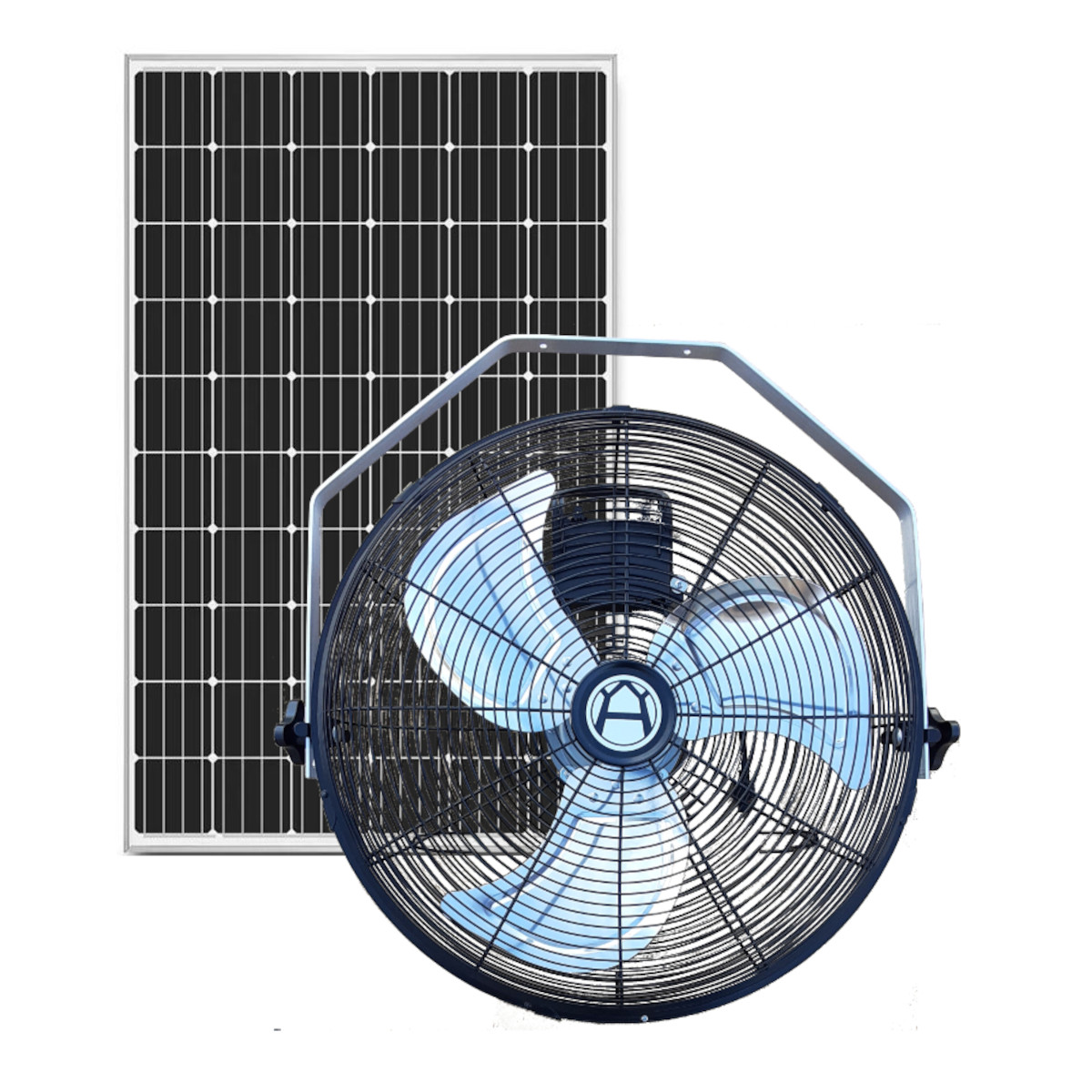
One horse owner in Arizona cooled her barn using solar fan kits for $0 a month in operating costs, running airflow continuously through summer heat without a utility bill attached to it. That kind of always-on operation is exactly what proactive ammonia control needs, since fans that only run when someone remembers to flip a switch miss the humidity buildup that happens overnight or while nobody’s on-site.
Sizing depends on barn volume and stall count more than square footage alone. Small stalls and isolated storage areas do fine with a single compact fan, while larger open barns need multiple units positioned to create real airflow patterns across pits and alleys, not just one strong draft near the door. Solar-powered ventilation pairs well with everything else in this guide: better ventilation timing doesn’t help if the fan can’t run reliably, and a reliable fan doesn’t fix ammonia on its own if manure and floor management are ignored.
Pro Tip: Pair your solar fan placement with your pit and alley layout, not just your barn’s floor plan. A fan aimed at open floor space does far less for ammonia than one angled to pull air across the wettest, highest-traffic zones where volatilization is worst.
A Barn Manager’s Ammonia Reduction Checklist
You don’t need to fix everything at once, and trying to usually means nothing gets finished. Break it into what you can do this week, what needs a season, and what waits for budget.
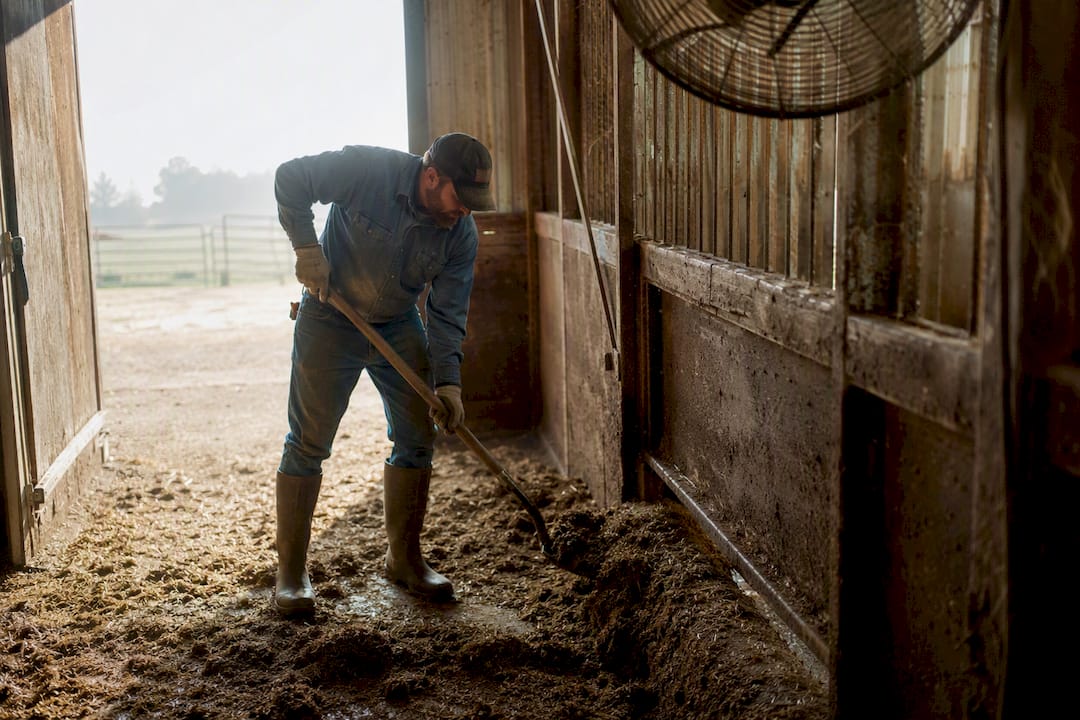
Week one: Adjust ventilation timing to run proactively rather than reactively, pull any wet or caked bedding, and set up a basic monitoring routine with a handheld ammonia detector or a fixed sensor if you have one on hand.
One to three months: Review feed formulation with phase feeding in mind, tighten your manure removal cadence, and trial an acidifier or urease inhibitor on a section of litter to compare against untreated areas.
Long term: Budget for floor redesign where pooling is chronic, add pit covers where feasible, and only consider a scrubber or biofilter if you’re running an enclosed, high-density operation where at-source measures have already been maxed out.
Work the list in that order. Skipping straight to expensive technology while ignoring cleaning schedules and ventilation timing wastes money on a fix that a $20 change in routine would have solved.
Where Western Harmonics Fits in Your Ammonia Plan
Every measure in this guide works better when your ventilation actually runs on schedule, and that’s the piece Westernharmonics builds hardware around. Our solar fan kits give you proactive airflow without a utility trench or a monthly power bill, which matters most in the barns, stables, and outbuildings where grid access is spotty or nonexistent.

A single 10W solar fan kit handles small stalls and isolated storage areas well. Medium barns with multiple stalls or open bays tend to need a multi-fan system to move air across the full floor plan instead of just one corner. Larger open buildings, pole barns, and metal structures benefit from a 200W hanging fan kit with battery backup, which keeps running overnight when ammonia buildup is at its worst and nobody’s around to notice it climbing.
We built the first solar fan kit sold in the U.S. market, and installs like the Arizona horse barn running at zero monthly cost are the standard we still hold ourselves to. If you’re not sure which setup fits your barn’s size and layout, browse the full Western Harmonics catalog for sizing guidance and product comparisons, and get a fan running before the next humid stretch pushes your ammonia levels somewhere you don’t want them.
The Overlooked Piece Most Ammonia Advice Skips
Most barn ammonia guides treat ventilation, manure management, and feed changes as three separate checklists, and that framing sells short how much they depend on each other. A barn with perfect floor drainage and daily manure removal still builds ammonia fast if the air sits stagnant and humid overnight. A powerful fan running on a fixed timer still can’t compensate for scrapers smearing a thin slurry film across the floor twice a day.
The research backs a systems view over a single-fix mentality: combined manure and ventilation strategies consistently outperform any one measure taken alone, and the biggest reduction numbers in the data, that 81.7% swine figure, came from stacking feed changes on top of ventilation improvements, not from either alone.
Where I think the conventional advice actually misleads people is in the sequencing. A lot of guidance leads with technology, air scrubbers, biofilters, automated systems, as if the sophisticated fix is the smart one. In practice, the at-source changes almost always deliver more ammonia reduction per dollar than end-of-pipe equipment, and they’re the ones a single manager can actually execute without a capital budget meeting. Fix the floor, fix the feed, fix the fan schedule. The expensive technology is for the operations that have already done those three things and still need more.
— Chris
Sources
- Ammonia emissions and building-related mitigation strategies in dairy barns: a review
- Controlling the effects of ammonia and phosphorus | Poultry Environmental Quality Handbook
- Ammonia control: best management practices (Extension catalog)
- Review: Capture and treatment of ammonia and methane from cattle housing (Journal of Dairy Science review)