

What Do IP Ratings Actually Mean for Your Devices?
What Do IP Ratings Actually Mean for Your Devices?
An IP rating, defined by IEC 60529, tells you how well an enclosure resists solids and liquids using a two-digit code. The practical rule is simple: match the rating’s test conditions to your actual exposure, not to whichever number sounds highest. IP65 and IP67 both show up constantly on product boxes, but they protect against different things. Before you trust either one, check what the digits mean and whether the manufacturer’s test report backs up the claim.
- IP65: dust-tight, protected against low-pressure water jets from any direction
- IP67: dust-tight, protected against temporary immersion under specified conditions by the manufacturer
- The practical rule: pick the digit that matches your real-world exposure, then confirm it against the datasheet or test report
Key Takeaways
The single most important fact about IP ratings is that the digits describe specific tests, not a general quality score, so the right rating depends entirely on matching test conditions to real exposure.
| Point | Details |
|---|---|
| IP code structure | The first digit (0–6) covers solids and hazardous parts; the second (0–9/9K) covers liquids. |
| X means untested | An X in either position means that axis wasn’t tested, not that it failed. |
| Higher isn’t always better | IP68 immersion protection doesn’t guarantee IP69K resistance to high-pressure, high-temperature jets. |
| Confirm the test conditions | IP68 has no fixed depth or duration, so always check the manufacturer’s stated parameters. |
| Ask for the test report | Confirm whether the tested sample was fully populated and which IEC 60529 edition applies. |
Table of Contents
- IP Ratings Explained: Reading the Code Letter by Letter
- What the First Digit Tells You About Dust and Debris
- The Second Digit and What Each Liquid Test Actually Simulates
- Reading X Marks and Supplementary Letters Correctly
- IP65 vs IP67 vs IP68 vs IP69K: Matching the Rating to the Job
- How IEC 60529 Testing Actually Works, and What It Skips
- A Simple Framework for Choosing the Right Rating
- What We Look For When Sourcing Ingress-Rated Hardware
- Where to Verify IP Rating Details
- Why Buyers Overtrust the Number and Undertrust the Test
- Sources
IP Ratings Explained: Reading the Code Letter by Letter
Every IP code follows the same structure: the letters “IP” followed by two numerals, and sometimes an extra letter tacked on the end. Once you know how to parse it, you can decode any rating in about five seconds.
- “IP” stands for Ingress Protection, the family name for this entire classification system under IEC 60529.
- First numeral (0–6) covers protection against solid objects, from no protection at all up to fully dust-tight enclosures.
- Second numeral (0–9, sometimes written as 9K) covers protection against liquids, ranging from no protection to high-pressure, high-temperature jet washing.
- X in place of a digit means that axis wasn’t tested. IPX7 tells you nothing about dust resistance, and IP5X tells you nothing about water.
- Supplementary letters (like A, B, C, D for access to hazardous parts, or H, M, S, W for special conditions) appear after the two numerals when relevant.
That’s the whole system. A rating like IP20 covers basic indoor protection against fingers and large debris. IP68 covers dust-tight enclosures rated for continuous submersion. Everything else on the scale sits somewhere between those two extremes, and the numerals never skip meaning. A jump from IP54 to IP65 isn’t cosmetic. It’s the difference between “limited dust protection” and “completely dust-tight,” which matters a great deal if your gear sits in a barn aisle or next to a grain bin.
What the First Digit Tells You About Dust and Debris
The first digit measures two things at once: how well an enclosure keeps out solid particles, and how well it keeps fingers and tools away from live or moving parts inside. Testing labs use articulated test probes, ranging from a jointed test finger to a thin wire, to check whether they can reach hazardous internal components. For the top two tiers, engineers place the device in a dust chamber and run it under vacuum or pressurized airflow for several hours.
- IP2X: blocks fingers and objects larger than 12.5 mm, common on basic control panels
- IP4X: blocks tools and wires larger than 1 mm, a step up used on many indoor electrical fixtures
- IP5X: dust-protected, limited ingress allowed that won’t interfere with operation
- IP6X: dust-tight, zero ingress permitted under test conditions
The jump from IP20 to IP40 matters more than the numbers suggest. IP40 blocks particles larger than 1 mm, while IP20 only blocks objects larger than 12.5 mm. Neither offers liquid protection, but IP40 is meaningfully tighter against sawdust, chaff, or the fine grit that collects around barn equipment.
Pro Tip: Don’t overlook the “hazardous parts” half of the first digit. A rating of IP2X on a junction box isn’t really about keeping dust out. It’s about keeping a curious finger away from a live terminal, which matters just as much as ingress if you’ve got kids or animals near your equipment.
The Second Digit and What Each Liquid Test Actually Simulates
The second digit is where most buying confusion happens, because it isn’t a simple ladder from “less wet” to “more wet.” Each numeral corresponds to a distinct test rig simulating a specific failure mode, and passing one doesn’t guarantee passing another.
- IPX1/IPX2: vertical or angled dripping water, simulating light indoor condensation
- IPX3/IPX4: spraying water at various angles, simulating rain or splashing
- IPX5: low-pressure water jets from a nozzle, simulating a garden hose
- IPX6: powerful water jets from a larger nozzle, simulating heavy seas or high-pressure hose-downs
- IPX7: temporary immersion, typically 1 meter deep for 30 minutes
- IPX8: continuous immersion under conditions the manufacturer defines and must disclose
- IPX9K: high-pressure, high-temperature jets at close range, simulating steam cleaning
IEC 60529’s test rigs use very different physics to reach these ratings. Jet tests apply kinetic force through a nozzle at a defined flow rate. Immersion tests apply steady hydrostatic pressure with no kinetic component at all. A device engineered to survive a garden hose isn’t automatically engineered to survive a swim.
That distinction trips up a lot of buyers. IPX7 and IPX8 sound like a simple upgrade path, but they test different things than IPX5 or IPX6. A phone rated IPX8 might handle a drop in a lake just fine and still fail an IPX6 pressure-washer test, because nobody ran that test on it. Outdoor kiosks and control panels usually need IPX5 or IPX6 protection against wind-driven rain and hose-downs. Portable handhelds that might get dunked need IPX7. Submerged sensors, like a water-level probe in a stock tank, need IPX8 with a manufacturer-specified depth and duration. And washdown equipment in a dairy barn or food-processing line needs the IP69K rating, since regular immersion testing doesn’t cover high-pressure, high-temperature jets at all.
Reading X Marks and Supplementary Letters Correctly
An “X” in an IP code isn’t a failing grade. It just means that axis of testing wasn’t performed, which is common when a manufacturer only cares about one type of protection. IPX4 tells you nothing about dust resistance because dust wasn’t part of the test scope. IP5X tells you nothing about water for the same reason.
Supplementary letters carry real meaning too, and skipping past them costs you information:
- Letters A, B, C, D specify protection against access to hazardous parts by back of hand, finger, tool, or wire
- Letter H indicates high-voltage apparatus
- Letter M means the device was tested for water effects while in motion
- Letter S means it was tested while stationary
- Letter W indicates additional protection against weather conditions
Watch for a specific red flag: marketing copy that says “waterproof” or “weatherproof” without citing an actual IP code. That’s not a rating. It’s a slogan, and it tells you nothing about what test, if any, the product passed.
IP65 vs IP67 vs IP68 vs IP69K: Matching the Rating to the Job
These four ratings cover almost every consumer and industrial product you’ll encounter, and each one answers a different question about exposure.
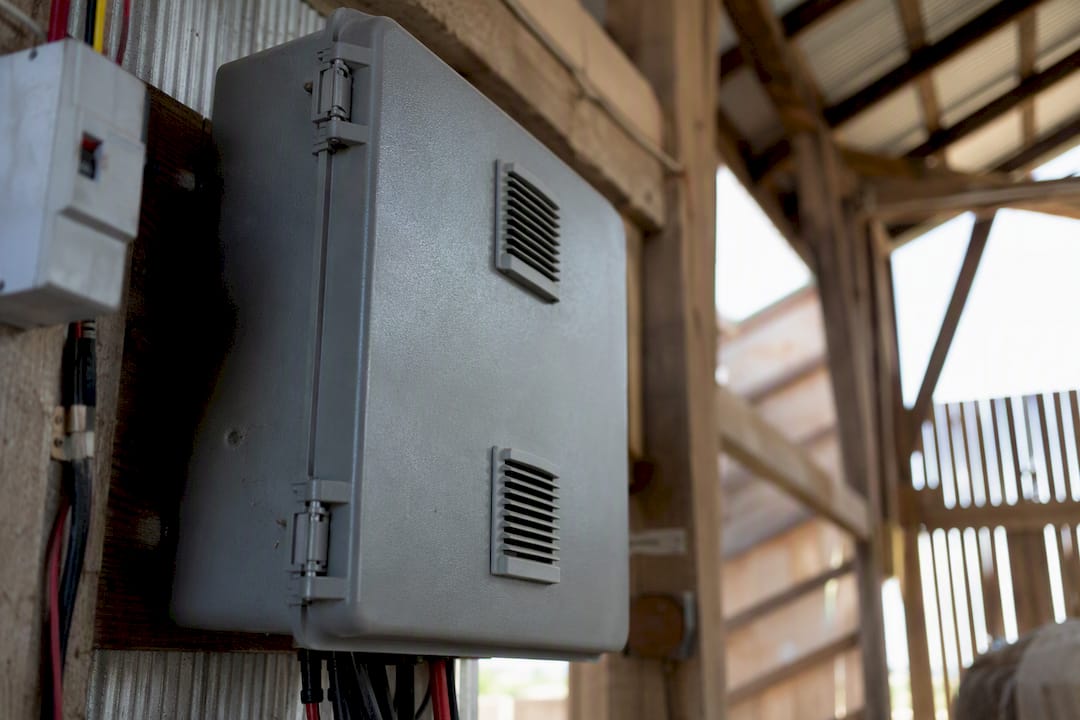
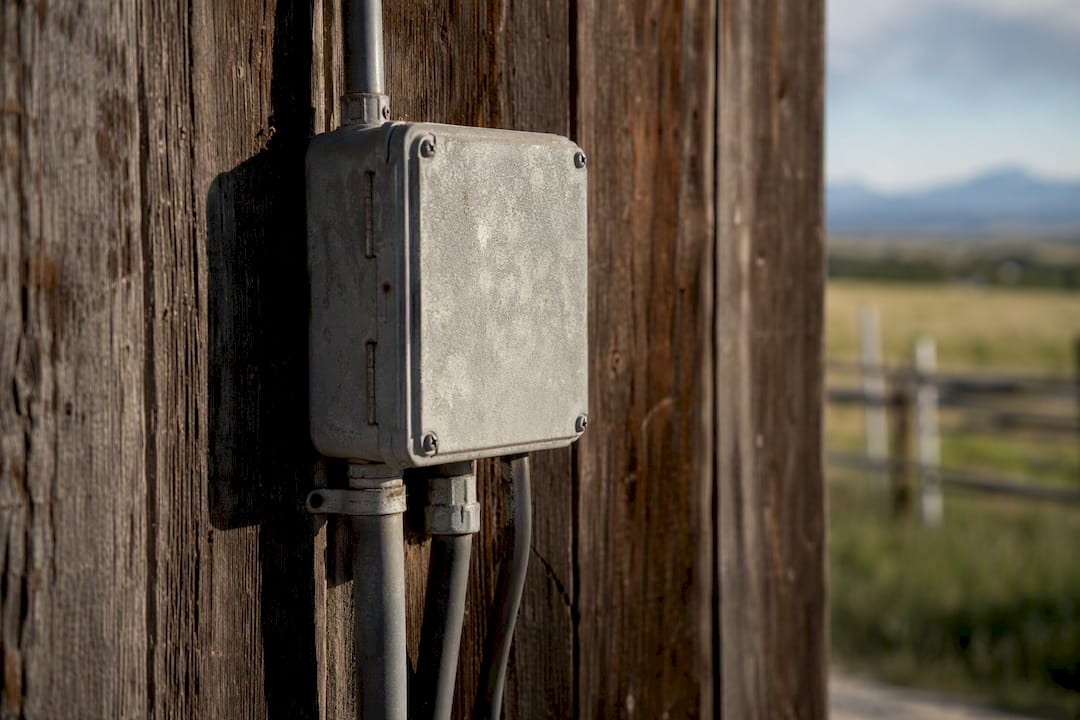
IP65 handles dust-tight protection plus low-pressure water jets from any direction. It’s the workhorse rating for outdoor enclosures, security cameras, and control panels exposed to wind-driven rain, but it won’t survive being dunked in a bucket.
IP67 adds dust-tight protection plus temporary immersion under defined conditions. This is the standard for portable handhelds and rugged phones that might get dropped in a puddle or left out during a storm.
IP68 goes further with dust-tight protection plus immersion under manufacturer-defined conditions, meaning the depth and duration aren’t fixed by the standard. Always check the datasheet, because “IP68” on two different products can describe very different real-world capabilities.
IP69K covers high-pressure, high-temperature jet washing, the standard for food-processing equipment and vehicle washdown stations. An IP68 immersion rating does not guarantee IP69K performance, since the two tests measure entirely different stresses.
| Rating | Protects against | Common use case |
|---|---|---|
| IP65 | Dust, low-pressure jets | Outdoor panels, security cameras |
| IP67 | Dust, temporary immersion (1m/30min) | Handheld electronics, rugged phones |
| IP68 | Dust, manufacturer-defined immersion | Submerged sensors, dive equipment |
| IP69K | Dust, high-pressure/high-temp jets | Food processing, vehicle washdown |
The mistake buyers make most often is assuming a higher number always beats a lower one. It doesn’t. An IP68-rated enclosure built for slow, deep submersion might still fail a high-pressure spray test that an IP65 unit passes easily, which is exactly why engineers frequently specify dual ratings like IP66/IP68 when a device faces both jets and immersion.
How IEC 60529 Testing Actually Works, and What It Skips
Every IP test uses specific apparatus with defined parameters. IPX5 uses a 6.3 mm nozzle at a set flow rate and distance. IPX6 steps up to a 12.5 mm nozzle with more force behind it. IPX7 means full immersion at 1 meter for 30 minutes, while IPX8 leaves the depth and duration up to the manufacturer, who must publish those numbers separately.
- The lab selects the test rig matching the claimed numeral: dust chamber, drip rig, oscillating spray, jet nozzle, or immersion tank.
- The device runs under the rig’s specified duration, pressure, and distance.
- Inspectors check for ingress or functional failure once the test ends, applying the standard’s pass criteria.
- Results get documented against the exact edition of IEC 60529 used, since older editions sometimes differ slightly from current ones.
One detail buyers routinely skip: whether the tested sample was fully assembled and populated with all its connectors, seals, and components. A rating earned on a bare enclosure with no wiring installed tells you far less than one earned on a fully populated production unit.
IP testing also has hard boundaries. It does not cover corrosion, solvent exposure, UV degradation, icing, fungus, or vermin resistance. If your equipment sits outside year-round, an IP rating alone won’t tell you how it holds up against ten summers of sun and salt air.
Pro Tip: Always ask for the test edition number, not just the IP rating itself. Standards get revised, and a rating earned under an older test protocol isn’t automatically equivalent to one earned under the current edition.
A Simple Framework for Choosing the Right Rating
Picking an IP rating doesn’t require memorizing every numeral combination. It requires four steps done in order.
- Define the actual exposure. Will the device see rain, splashing, submersion, or pressure washing? Be specific rather than defaulting to “outdoors.”
- Match the exposure to the correct test mode. Rain and splashing call for IPX4 or IPX5. Occasional dunking calls for IPX7. Routine steam cleaning calls for IP69K.
- Check whether the rating applies mated or unmated. A connector might be rated IP67 only when fully plugged in, and open or loose when disconnected.
- Request the test report and service-life data. Confirm the sample was populated, note the standard’s edition, and ask how the rating holds up after years of thermal cycling and vibration.
A greenhouse fan controller facing splashing and dust needs IP65 at minimum. A submerged stock-tank sensor needs IP68 with a stated depth. A dairy barn’s washdown equipment needs IP69K, full stop. Overspecifying costs money without adding real protection, and underspecifying leads to field failures that are expensive to diagnose after the fact.
Pro Tip: Higher IP ratings often mean tighter seals, which can trap heat inside an enclosure. If your device generates its own heat, like a DC controller or a fan motor housing, factor thermal management into the decision alongside ingress protection.
What We Look For When Sourcing Ingress-Rated Hardware
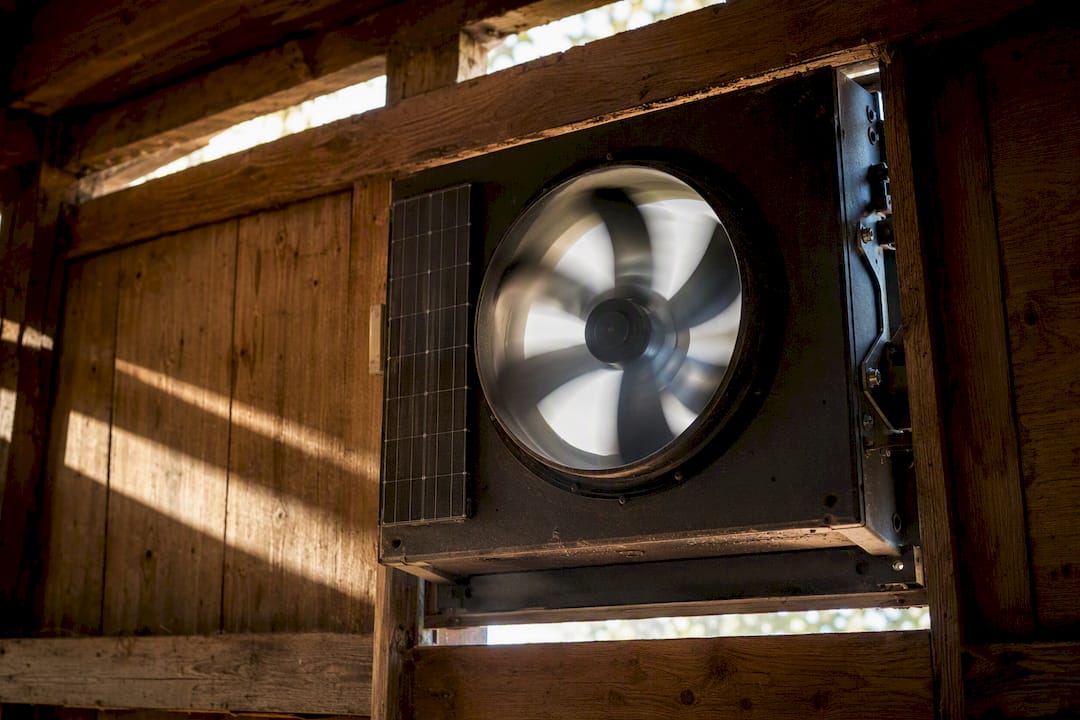
Westernharmonics designs solar ventilation systems and DC micro-power units that live in barns, greenhouses, and rural infrastructure where dust, humidity, and washdown are daily realities, not edge cases. When we evaluate enclosures and connectors for our solar and battery systems, we ask vendors the same questions we’d recommend to any buyer: was the sample populated, what edition of IEC 60529 was used, and does the rating cover mated connectors under load.
Rugged off-grid hardware fails at the seams, not the specs sheet. A rating means little if the tested unit wasn’t wired, sealed, and stressed the way it will actually be used in the field.
Where to Verify IP Rating Details
Confirm any claimed rating against the IEC 60529 standard itself, or review how the test rigs work before trusting a datasheet’s shorthand. For outdoor power components, examples like Protecta IP66 products show how the rating applies to real electrical hardware.
Why Buyers Overtrust the Number and Undertrust the Test
The conventional advice on IP ratings tells you to “look for the highest number you can afford.” That advice is backward. The research behind this article points to a different priority: match the test mode to your exposure first, then worry about the numeral.
Most field failures I’ve seen discussed in engineering circles don’t come from underrated equipment. They come from equipment rated for the wrong kind of wet. An IP68 sensor drowning slowly in a stock tank and an IP65 control panel getting blasted by a pressure washer face opposite problems, and no single number solves both.
What gets overlooked constantly is the populated-sample question. A rating earned on an empty enclosure shell means far less than one earned on a fully wired, fully sealed production unit, yet almost nobody asks vendors which version got tested. If you take one thing from this explainer, make it that question. Ask for the test report before you ask for a discount, because the report tells you what actually happened in that dust chamber or immersion tank, and the marketing copy usually does not.
— Chris
Sources
- Ingress Protection (IP) ratings
- How IP rating testing works under IEC 60529 | Eurotech
- IP code
- IP ratings explained | MilDef