

Barn Ammonia Smell: Why It Happens and How to Fix It Fast
Barn Ammonia Smell: Why It Happens and How to Fix It Fast
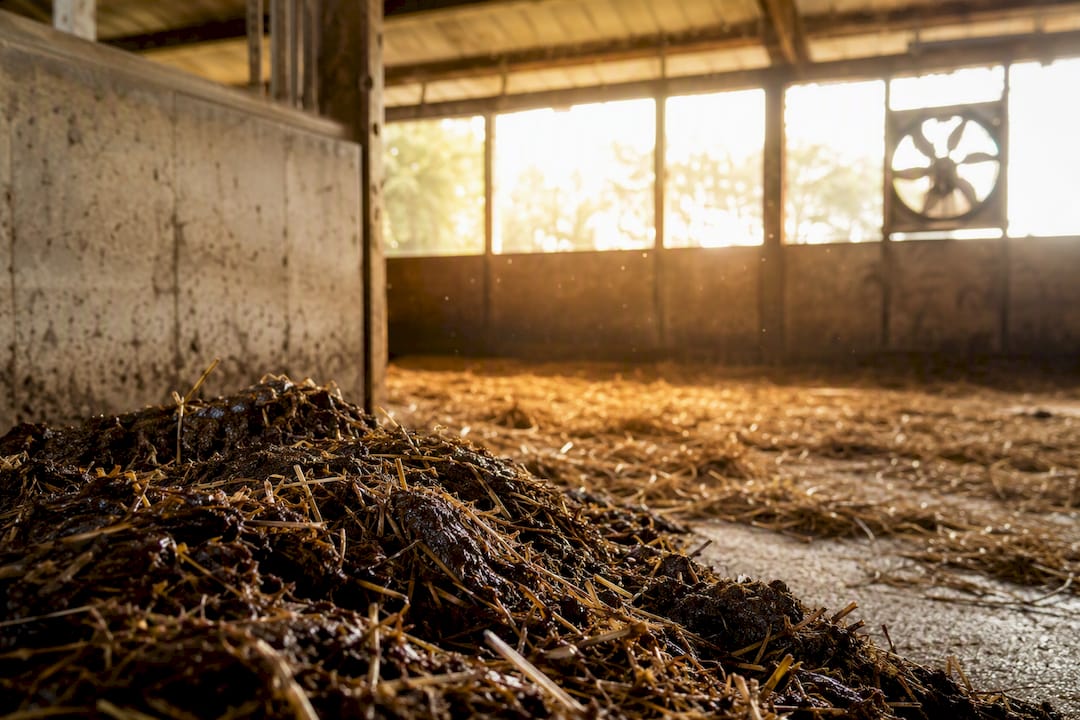
If you can smell sharp ammonia when you walk into the barn, act now. That smell almost always means airborne levels are already at or above what’s harmful to lungs, both yours and your animals’. Open every vent and door you have, start exhaust fans, and pull soaked bedding out of the stalls immediately. If a horse or other animal is coughing, has watery eyes, or seems reluctant to put its head down, move it to fresh air and call your vet.
- Ventilate first: open doors, windows, and turn on exhaust fans before you do anything else.
- Strip wet bedding and manure from the worst-smelling spots right away.
- Isolate any animal showing respiratory distress.
- Test the air with a strip or meter once ventilation is running.
One warning worth repeating: never reach for hydrated lime as a quick fix with animals still in the barn. It’s caustic, and misapplied lime can spike ammonia release before it settles down.
Key Takeaways
Continuous ventilation, prompt bedding removal, and safe amendments together keep barn ammonia below the 10 ppm irritation threshold that damages animal and human respiratory health.
| Point | Details |
|---|---|
| Smell means exposure | If you can smell ammonia, levels are likely already at or above the 10 ppm irritation threshold. |
| Ventilate before anything else | Exhaust airflow removes ammonia faster than bedding changes or amendments alone. |
| Skip hydrated lime | Zeolite and enzyme products bind ammonia more safely and effectively than caustic lime. |
| Test, don’t guess | Strips or meters catch rising ammonia before your nose does, especially after olfactory fatigue sets in. |
| Solar ventilation solves the gap | Westernharmonics’ DC and solar fan kits keep air exchanging continuously in barns without reliable grid power. |
Table of Contents
- What Causes That Barn Ammonia Smell (and Why It’s Dangerous)
- The First Hour: Cutting Airborne Ammonia Right Now
- Daily and Weekly Routines That Stop Ammonia Odor Before It Starts
- Ventilation Design That Actually Removes Ammonia
- Choosing Safe Amendments Without Making Things Worse
- Testing the Air: Strips, Meters, and Action Thresholds
- Manure Management Keeps Ammonia From Coming Back
- Sources
What Causes That Barn Ammonia Smell (and Why It’s Dangerous)
Ammonia in a barn comes from urea breaking down. Urine and manure carry urea, and bacteria on bedding and floor surfaces produce an enzyme called urease that converts it into ammonia gas. Moisture accelerates the reaction, heat speeds it up further, and bedding with a high pH (like some old, saturated straw) gives the bacteria an even friendlier environment to work in. That’s the entire chemistry behind what causes barn ammonia, and it’s why a warm, wet, poorly drained stall turns into an ammonia factory within a day or two.
Here’s the part most barn owners get wrong: your nose is not a reliable meter. Humans typically detect ammonia by smell somewhere between 5 and 18 parts per million, but respiratory irritation in both people and animals starts around 10 ppm. By the time the smell is obvious to a visitor walking in from outside, your animals living in that air around the clock have likely built up some tolerance and stopped noticing it, even as damage to their airways continues. Extension researchers put emergency action at elevated ammonia levels, and very high concentrations require immediate evacuation. Keeping barn air quality in the safe zone means treating the smell as a lagging indicator, not the first warning sign.
The First Hour: Cutting Airborne Ammonia Right Now
Once you’ve caught the smell, work through this checklist in order:
- Turn on exhaust ventilation. Pull contaminated air up and out rather than just stirring it around the aisle.
- Avoid pointing fans straight down at manure or wet floor areas. High-speed air blowing directly across a soiled surface actually scours more ammonia into the breathing zone instead of removing it.
- Strip out wet bedding and manure from every stall showing damp or discolored spots, not just the one that smells worst.
- Isolate distressed animals. Coughing, nasal discharge, or heavy breathing means that animal needs clean air immediately and a vet call if symptoms don’t ease within the hour.
- Apply a safe amendment to bare, dry floor after mucking if you need extra insurance against a rebound in odor. Zeolite or an enzyme product works well here. Skip hydrated lime while animals are present.
Pro Tip: Keep a phone timer running once you start ventilating. If the smell hasn’t noticeably dropped within 20 to 30 minutes, treat that as a sign your ventilation setup isn’t moving enough air, not a reason to wait longer before testing.
Evacuate the barn if any animal shows labored breathing or if a meter reads above 25 ppm. That’s not a judgment call at that point. It’s a threshold.
Daily and Weekly Routines That Stop Ammonia Odor Before It Starts
Reducing barn smell long term comes down to routine, not heroics. A few consistent habits beat one exhausting deep clean every month.
- Daily: Strip wet spots in each stall, not just the ones that look bad. Check mats and drains for pooling urine, which is the single biggest daily driver of ammonia buildup.
- Weekly: Do a full strip clean of each stall, let the floor dry completely before re-bedding, and check that drainage is actually working and not just hidden under a mat.
- Bedding choice matters more than people expect. Wood pellets and pelleted bedding absorb urine and lock in moisture better than loose straw, which tends to trap wet pockets underneath. Peat moss performs similarly well and composts easily afterward. Straw is cheap and familiar, but it needs a deeper layer and more frequent turning to manage the same moisture load.
The goal with any bedding is absorption and airflow at the surface, not just volume. A thick pile of soaked straw holds moisture (and ammonia) far longer than a properly maintained pelleted bed.
Ventilation Design That Actually Removes Ammonia
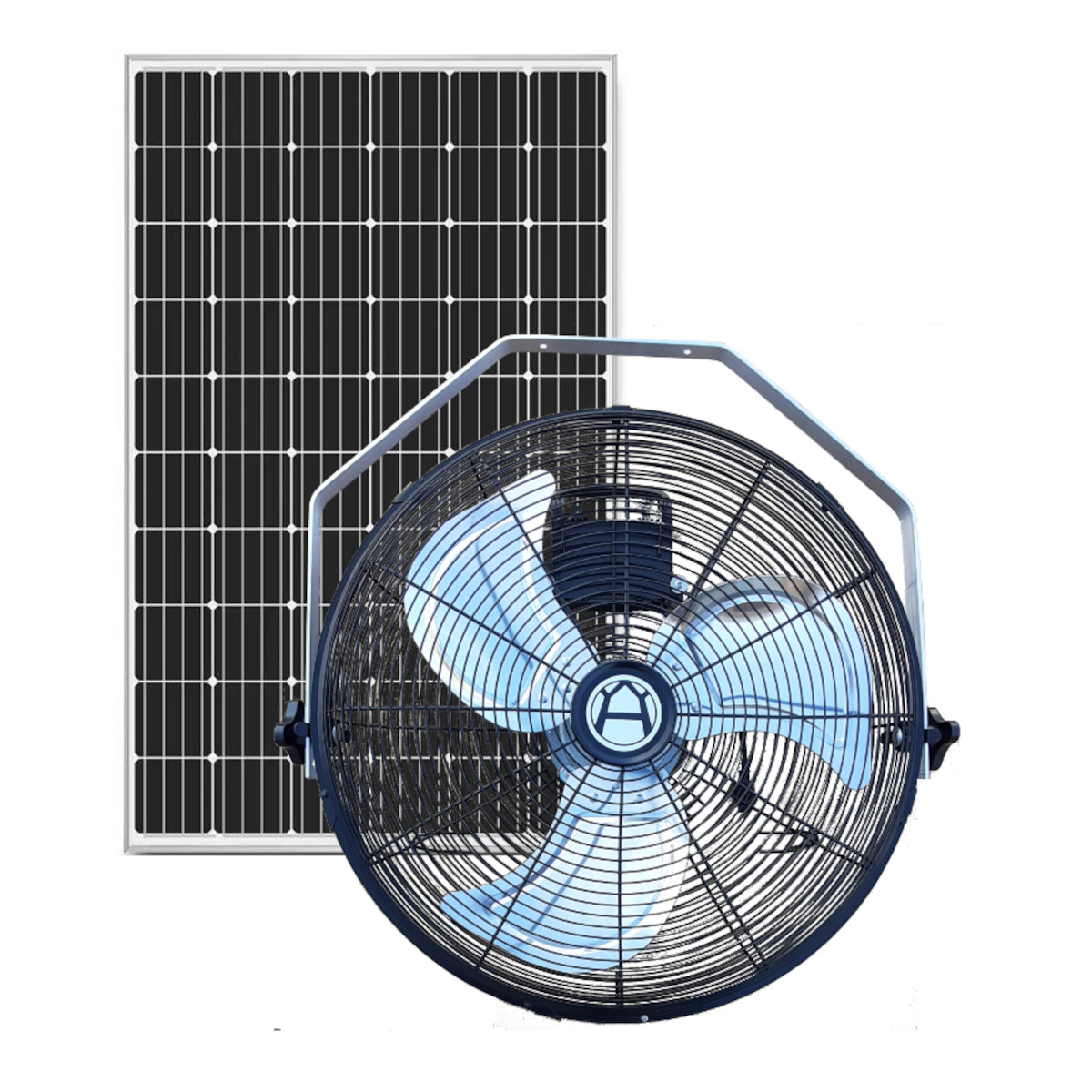
Good ventilation for barn ammonia isn’t about maximum airflow. It’s about the right pattern of airflow. Purdue Extension’s indoor air quality guidance notes that air entering a barn should travel across the ceiling first and descend gradually, rather than blasting straight down onto bedding and stirring ammonia off the floor. Exhaust-first setups, where stale air is pulled out continuously rather than just mixed around, consistently perform better than a single oscillating fan aimed at the aisle.
Seasonal adjustment matters too. In winter, caretakers often close everything up to keep animals warm, which is exactly when ammonia concentrations climb highest. A well-managed barn keeps some continuous air exchange running year-round, adjusted so it doesn’t create a direct draft on the animals themselves.
Ventilation is genuinely the most critical lever you have. Bedding and cleaning routines matter, but without air moving ammonia out of the building, you’re just managing the smell instead of solving it.
For barns without reliable grid power, whether that’s a back pasture shed or a property where running conduit is impractical, DC-powered solar ventilation keeps air exchanging continuously without depending on an outlet. A solar hanging fan built for livestock spaces runs off the sun during the day and, paired with a small battery, keeps working through the evening feeding and mucking routine when ammonia levels often spike.
Choosing Safe Amendments Without Making Things Worse
Once ventilation and bedding are handled, amendments can add a real layer of ammonia control at the source. Extension guidance consistently points to zeolite and enzyme-based products as the safer, more effective choice over agricultural or hydrated lime. Zeolite works by binding ammonia molecules directly; enzyme products accelerate the breakdown of urea before it converts into gas.
Hydrated lime, by contrast, is corrosive. It can burn mucous membranes and soften hoof tissue on contact, and if applied to a wet stall, it can temporarily spike ammonia release before things improve. If you ever use it, the stall needs to be completely empty of animals and allowed to off-gas fully before anyone goes back in.
- Apply zeolite or enzyme product directly onto wet spots immediately after mucking out.
- Work it into the floor surface before laying fresh bedding on top.
- Keep any lime-based product, if used at all, strictly out of stalls with animals present.
- Store amendments in a dry, sealed container away from feed and tack.
Pro Tip: Deodorizers mask smell; they don’t reduce ammonia gas. If a product just smells like pine or citrus without listing an active binding ingredient like zeolite, you’re covering the problem, not fixing it.
Testing the Air: Strips, Meters, and Action Thresholds
You don’t need lab equipment to know what your barn air is really doing. Colorimetric test strips are cheap and detect ammonia in bands, typically 0, 5, 10, 25, and 50 ppm, giving you a quick read without any calibration. Handheld electronic meters cost more but give a continuous digital readout, which is useful if you’re troubleshooting a specific stall or testing a new ventilation setup before and after.
| Ammonia Level | What It Means | Action Required |
|---|---|---|
| 0–5 ppm | Target range for a well-ventilated barn | None; maintain current routine |
| 5–10 ppm | Acceptable but worth watching | Check ventilation and bedding moisture |
| 10–25 ppm | Irritation threshold reached | Increase ventilation, strip wet bedding now |
| Above 25 ppm | Emergency territory | Evacuate animals, ventilate fully, call vet if symptoms present |
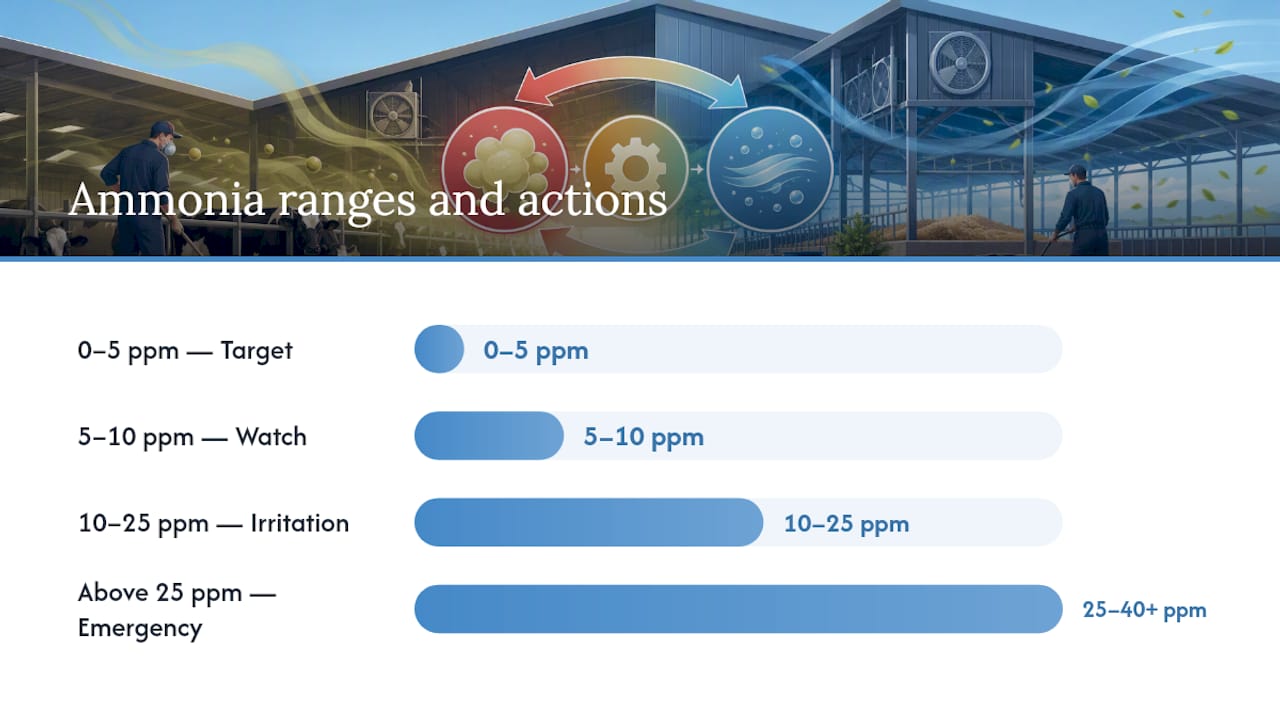
Well-ventilated barns typically hold steady levels near 5–10 ppm, while poorly ventilated buildings, especially in winter, can climb past 25 to 40 ppm. If an animal shows persistent coughing, nasal discharge, or reduced appetite alongside elevated readings, that’s a call to your vet, not a wait-and-see situation.
Manure Management Keeps Ammonia From Coming Back
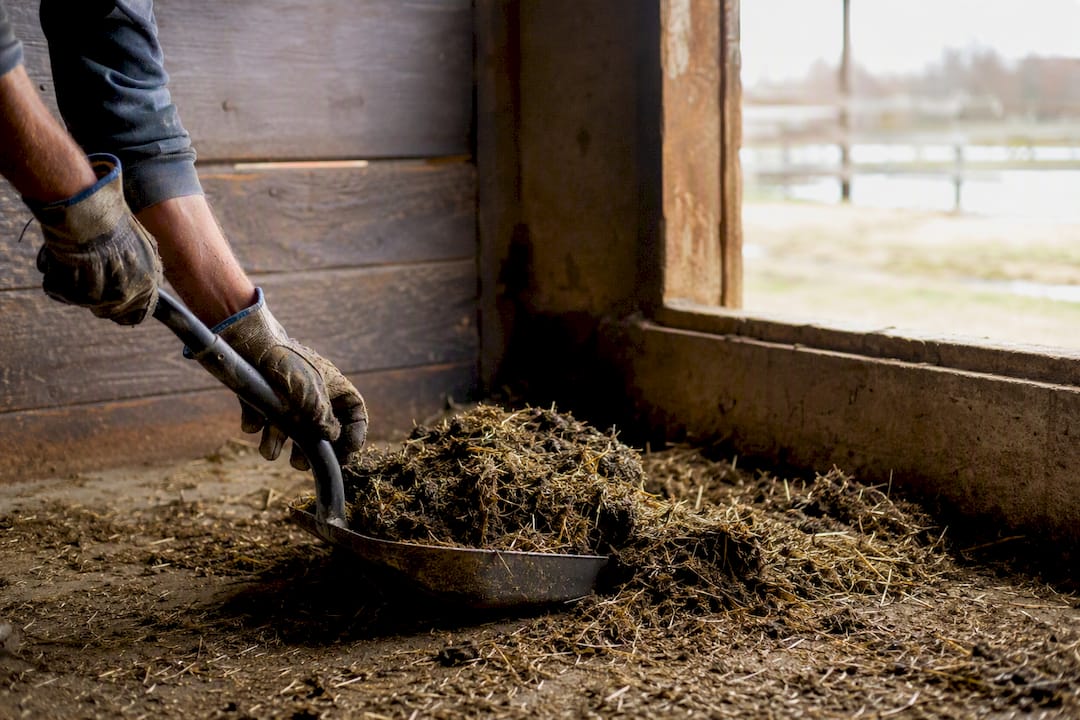
Where you put manure matters almost as much as how fast you remove it from stalls. Manure piled against or near barn walls off-gasses ammonia that drifts right back inside, undoing your ventilation work. Move manure well away from the building and cover the pile if possible.
Composting properly, rather than just stockpiling, turns manure into a low-odor, useful product instead of an ongoing smell source. Turning the pile regularly keeps decomposition aerobic, which produces far less ammonia than a compacted, oxygen-starved heap.
- Remove manure from stalls daily; don’t let it accumulate as a buffer against a “big cleaning day.”
- Site the compost or manure pile downwind and away from barn air intakes.
- Turn compost regularly to keep it aerobic rather than letting it go anaerobic and sour.
- Consider a dedicated wood-chip area for urine-heavy traffic zones, replacing chips when they start to smell.
Why routine care and long-term ventilation go together
Fixing a bad smell for one afternoon is easy. Keeping barn air quality steady through a whole winter is the real test, and it comes down to whether your ventilation runs continuously or only when someone remembers to flip a switch. Solar and DC ventilation solve that problem by design, since they keep moving air whether or not the barn has grid power nearby. Western Harmonics built its first solar fan kits specifically for that gap between “the barn needs airflow” and “the outlet is 200 feet away.” Preventive ventilation investment, made once, tends to save far more time than repeated ammonia emergencies.
A Practical Next Step for Barns Fighting Ammonia Long Term
Bedding changes and amendments buy you time, but they can’t replace continuous airflow, and running a wired fan to a stall or run-in shed often means expensive conduit or an extension cord you’ll trip over by March. Western Harmonics built the original solar fan kit category specifically for barns like yours, where grid power is inconvenient, unreliable, or simply not there.

For a single stall or small shed, the 10W solar fan kit delivers steady air exchange with no wiring required. Larger aisles or multiple stalls do better with the two-fan solar system, which keeps air moving across a bigger footprint without doubling your maintenance. If your barn sees inconsistent sun or you want fans running reliably into the evening feeding routine, the 200W hanging fan kit with battery backup covers that gap. Not sure what size your barn actually needs? Run your dimensions through the system designer for a sizing recommendation before you buy.
Sources
- Ammonia and inhalation hazards (NCBI book chapter)
- Indoor air quality: Ammonia and livestock (Purdue Extension IAQ-1)
- Air quality and emissions from livestock and poultry production (UGA/compiled research)
This article is general information, not a substitute for advice from a qualified doctor. Consult a qualified healthcare professional about your own circumstances before acting on anything here.